White Desert Safari: Camping in the Bahariya Oasis
Few journeys in Egypt capture the imagination quite like a White Desert safari. Just a few hours drive southwest of Cairo, past the rustling palms of the Bahariya Oasis, lies a landscape that looks as though it belongs on another planet: mile after mile of dazzling white chalk spires, wind-sculpted mushroom rocks, and dunes that glow pink and gold at sunset. A White Desert safari is the classic Egyptian adventure, a blend of dramatic desert scenery, Bedouin hospitality, and nights spent under some of the darkest, starriest skies on Earth. If you have ever dreamed of sleeping in the Sahara, camping beside glowing chalk formations, and watching the Milky Way arc overhead from a sleeping bag, this guide is for you.
The White Desert Safari Experience at a Glance
The White Desert National Park, known locally as the Sahara el Beyda, is one of the most extraordinary natural wonders in Egypt. Located in the Western Desert, roughly 500 kilometres south of Cairo, the park protects a vast area of chalk karst landscape that has been carved by wind and sand into a surreal gallery of shapes. Every White Desert safari begins in the Bahariya Oasis, a fertile green pocket of springs and palm groves that has served travellers and traders for millennia. From Bahariya, safari jeeps roll out across gravel plains, past the dark cones of the Black Desert and the glinting shards of Crystal Mountain, before reaching the heart of the white chalk fields where most visitors spend the night.
A White Desert safari is far more than a scenic drive. It is an immersion in the living desert: the Bedouin drivers who guide the convoys, the campfires and lamb dinners cooked in the sand, the silence that descends after sunset, and the slow emergence of the stars. Whether you choose a quick day trip or a multi-day expedition, the experience stays with you long after you return to the city. This guide covers the geology, the landmarks, the itineraries, and the practical essentials you need to plan the perfect trip.
What Is the White Desert National Park?
The White Desert National Park was established in 2002 to protect a landscape of exceptional natural beauty and scientific importance. It covers an area of roughly 3,010 square kilometres in the western Egyptian desert, encompassing the famous chalk rock formations, as well as adjacent areas of black volcanic desert and fossil-rich plains. The park is part of the Western Desert, itself part of the Sahara.
The defining feature of the park is the white chalk rock, a sedimentary rock made almost entirely of the compressed skeletons of tiny marine organisms. When you stand among the white spires, you are standing on the bed of an ancient sea. The park is a protected area under Egyptian law, and visitors are asked to respect the fragile formations, pack out their rubbish, and camp only in designated areas. A responsible White Desert safari operator, such as Maddy Tours Egypt, will always follow these rules and help you experience the park without harming it.
The Chalk Rock Formations and How They Formed
The story of the White Desert begins roughly 70 million years ago, during the late Cretaceous period, when the Western Desert lay beneath a warm, shallow sea. For millions of years, the shells and skeletons of countless plankton, foraminifera, and other tiny marine creatures drifted down to the seabed and accumulated into thick layers of calcareous mud. Over geological time, these layers were compressed and cemented into chalk, a soft, white, porous limestone.
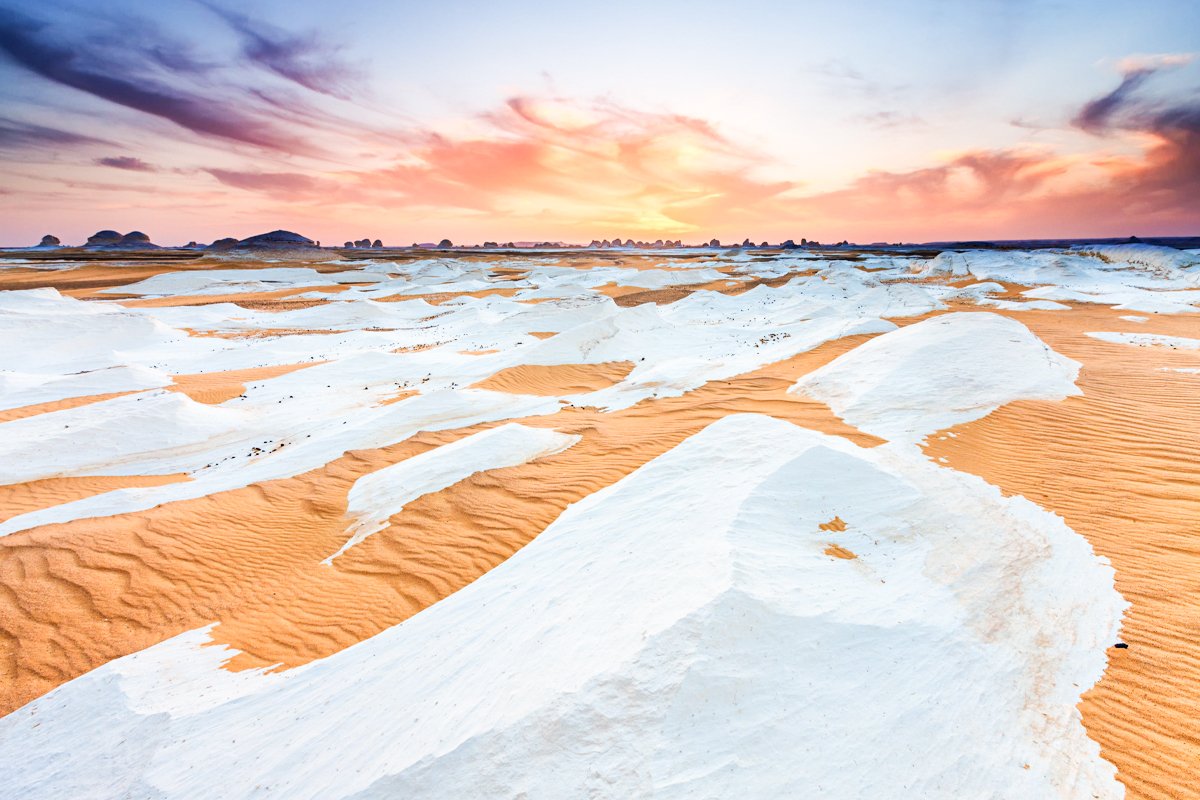
As the sea retreated and the region was uplifted, the chalk layers were exposed to the forces of erosion. Rain, wind, and especially the abrasive action of blowing sand gradually stripped away the softer material, leaving behind the harder, more resistant masses. The result is a landscape of surreal forms: towering spires, balancing boulders, mushroom-shaped rocks with narrow stems and wide caps, and fields of scattered white shards that look like broken porcelain. The famous mushroom rocks form because the base of each formation erodes faster than the top, undercutting the stem until the cap appears to float.
This process, known as differential erosion, is still working today: the chalk is remarkably soft, easily scratched by a fingernail, which is why visitors are asked not to climb or carve the formations. What makes the White Desert so special is not just the shapes, but the light. At sunrise and sunset, the white rock reflects the changing colours of the sky, turning from blinding white to pink, amber, and deep violet. This is the time when the desert puts on its most memorable show, and no White Desert safari is complete without watching the formations glow at dusk.
A Land of Fossils and Ancient Seas
Beyond the chalk, the park is rich in fossils. Shark teeth, sea urchins, and the coiled shells of ammonites can be found scattered across the desert floor, reminders of the creatures that once swam above what is now sand. Some areas of the Western Desert have yielded spectacular dinosaur fossils, including the giant sauropod Paralititan, discovered just south of Bahariya in 2000.
Bahariya Oasis: The Gateway to the Desert
Every White Desert safari begins and ends in the Bahariya Oasis, a bowl-shaped depression about 370 kilometres southwest of Cairo. Bahariya is one of the largest and most productive oases in Egypt, famous for its dates, olives, and mineral springs. The oasis is an archaeological treasure trove as well: the Valley of the Golden Mummies, discovered in 1996, contained hundreds of Roman-era mummies, and the ruins of ancient towns and temples dot the surrounding hills.
Modern Bahariya, centred on the town of Bawiti, is a relaxed and friendly place of mud-brick houses, guesthouses, and lush palm groves. Tourism has become increasingly important here, and the oasis is now home to dozens of small safari companies and camps. For visitors, Bahariya is where the desert journey truly begins: the jeeps are loaded, the Bedouin guides assemble, and the paved road gives way to gravel tracks leading into the white wilderness.
Hot Springs and Palm Groves
Bahariya is blessed with an abundance of natural springs, many of them warm and mineral-rich. Bir Bishmo, Bir al-Ghaba, and Bir el-Mattar are among the most popular, each offering a shallow pool where travellers can soak tired muscles after a day in the jeep. The water is warm, soothing, and believed by locals to have therapeutic properties for skin and joints. A dip in a Bahariya spring is the perfect way to begin or end a White Desert safari.
The oasis is also a paradise of date palms. Thousands of palm trees line the roads and surround the villages, their fruit ripening in autumn and forming the basis of a thriving local industry. Walking through the groves in the late afternoon, with the desert cliffs rising on every side, you understand why travellers and traders have been resting here for thousands of years. The contrast between the dense green of the oasis and the stark white of the desert just beyond is one of the defining images of the region.
El Haiz: The Remote Southern Outpost
A few kilometres south of the main oasis lies El Haiz, a tiny, traditional settlement that feels a world away from Bawiti. El Haiz is one of the oldest continuously inhabited places in the region, with archaeological evidence stretching back to the Old Kingdom. Its mud-brick houses, ancient wells, and palm groves are remarkably unspoiled, and its spring, Bir el-Haiz, is a quiet, atmospheric spot rarely visited by crowds.
Some White Desert safari itineraries stop at El Haiz on the way to or from the desert, offering a glimpse of traditional oasis life. Locals here still practice agriculture in the old ways, and the hospitality is genuine. For photographers, El Haiz is a treasure: crumbling fortifications, palm shadows, and the vast desert silence all around.
Bahariya Oasis Camping: Where the Desert Journey Begins
Many travellers add a night of Bahariya Oasis camping to their trip, arriving in Bawiti the evening before the safari, settling into a simple desert camp among the palms, and waking in time for an early departure. Overnight camps near the oasis offer warm hospitality, generous meals, and the chance to soak in a spring under the stars. It is an easy, comfortable way to break the drive from Cairo and start the desert adventure refreshed.
The Black Desert
To the northeast of the oasis, on the road toward Cairo, lies the Black Desert, a startling expanse of dark volcanic hills and windblown basalt. This landscape was formed millions of years ago by volcanic eruptions that spread lava and ash across the region. As the soft material eroded, it left behind cones and mounds of dark rock, often studded with glittering crystals. The contrast between the black hills and the pale desert floor is striking, and the area is a standard stop on the route to and from the White Desert.
The Black Desert has its own cinematic appeal. From the top of a hill called the English Mountain, visitors can look out over hundreds of black cones stretching to the horizon. Many White Desert safari itineraries time a stop here for sunrise or sunset, when the volcanic rock catches the light and the whole landscape seems to glow.
Crystal Mountain
One of the most unexpected sights on the route is Crystal Mountain, a low ridge of rock that glitters with huge quartz crystals. Known locally as Jabal al-Izzaz, this small outcrop is riddled with white and honey-coloured crystals, some as thick as a human arm, which sparkle brilliantly in the desert sun. Geologically, the crystals formed when hot, mineral-rich water filled cracks in the limestone and slowly cooled, depositing the quartz over millions of years.
Crystal Mountain is a popular photo stop on nearly every White Desert safari. The site is fragile, and visitors are asked not to break off or remove the crystals.
Agabat Valley
Beyond the main chalk fields lies Agabat Valley, a dramatic landscape of steep-sided sand canyons and narrow corridors carved into the rock. The word agabat means steps or obstacles, an apt name for a valley that once tested camel caravans crossing the desert. Today, Agabat is a highlight for more adventurous travellers, where the jeep picks its way through sandy defiles and the walls of yellow and white rock rise high above the track.
Agabat offers some of the most striking scenery in the region: rippled dunes, natural arches, and formations that change character with every turn of the light. It is also a rewarding place to stop for tea, as the Bedouin guides know exactly where the best vantage points hide. Not every White Desert safari includes Agabat, so if the canyon landscapes appeal to you, be sure to choose an itinerary that adds it to the route.
Choosing Your White Desert Safari Itinerary
One of the great strengths of the White Desert is that it can be experienced in a day, an overnight stay, or a longer expedition. Each option has its own rewards, and the right choice depends on your time, your budget, and how much of the desert experience you want. Whichever format you pick, planning a White Desert safari with a trusted operator makes all the difference. Below we compare the three classic White Desert safari formats.
Day Trip from Bahariya
A White Desert safari day trip is the quickest way to see the park, ideal for travellers who are short on time or uncomfortable with the idea of sleeping in the desert. You leave Bawiti in the morning, cross the Black Desert, visit Crystal Mountain and the first chalk formations, and stop for a picnic lunch among the white rocks. By late afternoon you return to the oasis in time for a shower and a warm spring soak before dinner.
A day trip gives you a genuine taste of the landscape and plenty of photography opportunities, but it misses the two great moments of the desert: sunset and the night sky. If your schedule allows, an overnight camp is strongly recommended.
White Desert Overnight Tour: The Classic Experience
The overnight camp is the classic White Desert safari and the version most visitors choose. You set out in the early afternoon, allowing time to reach the chalk fields before sunset. As dusk falls, the Bedouin guides prepare camp: mattresses and blankets are laid out on the sand, a fire is lit, and a traditional dinner of grilled chicken, rice, and fresh bread is cooked in the open air. After dinner, you lie back and watch the stars emerge, a spectacle that alone is worth the journey.
Waking in the White Desert is unforgettable. The sun rises over the chalk, turning the formations from cool grey to warm gold, and the morning air is crisp and silent. After tea and breakfast, you explore the rock fields, climb a dune or two, and take the classic photographs of the mushroom rocks against a clear blue sky. The overnight White Desert safari is the best balance of experience and practicality, and it remains the most popular choice for good reason.
Two-Night Expedition with Agabat and Farafra
For travellers who want to go deeper, the two-night expedition adds the Agabat Valley and often a second night in a different part of the desert. The extra day allows a more relaxed pace, longer hikes, and the chance to see both sunrise and sunset over the formations. Many two-night itineraries also cross the sands toward the Farafra Oasis, spending a night among the white dunes south of the park boundary.
A two-night White Desert safari is a genuine immersion in the Sahara. You will share meals with your Bedouin guides, learn to read the stars, and experience the profound quiet of a desert night far from any light pollution. Travellers who make the time almost always describe it as the highlight of their Egyptian holiday, and photographers value the two chances at perfect light.
| Option | Duration | Highlights | Best for |
|---|---|---|---|
| Day Trip | 1 day | Black Desert, Crystal Mountain, first chalk formations, picnic lunch, spring soak | Short on time; a first taste of the desert; families with young children |
| Overnight Camp | 1 day / 1 night | Sunset over the chalk, Bedouin camp dinner, stargazing, sunrise photography | Most travellers; the classic White Desert safari experience |
| Two-Night Expedition | 2 days / 2 nights | Agabat Valley, Farafra dunes, relaxed hiking, double sunsets and sunrises | Adventure seekers; photographers; those wanting full immersion |
The Bedouin Guides and Camp Dinner
The soul of a White Desert safari lies in its Bedouin guides. These are men of the Awlad Ali and other desert tribes, raised in the Western Desert, who know every track, every rock, and every star by name. They drive the jeeps with casual skill and navigate by memory where there are no roads. Travelling with them is not just practical; it is a cultural encounter that many visitors remember as the best part of the trip.
Bedouin hospitality is legendary, and the camp dinner is its centrepiece. As darkness settles over the white rocks, the guides lay out carpets and low mattresses around the fire. Dinner is cooked simply: chicken or meat grilled over coals, rice, vegetables, fresh bread baked in the sand, and sweet Bedouin tea brewed over the flames. The meal is eaten sitting on the ground, under the sky, in a circle that quickly feels like a family gathering rather than a tourist activity.
After dinner comes the tea. Strong, sweet, and black, it is poured from a small pot and passed around, and the conversation begins. Guides share stories of the desert, of camel caravans, of storms, and of the old ways of oasis life. There may be music, sometimes a simple drum or the sound of someone singing. It is a quiet, unhurried evening, and sharing it around the fire is a highlight of every White Desert safari.
Camping in the White Desert: Comfort and Etiquette
Camping in the White Desert is surprisingly comfortable. The safaris use traditional open-air camps: a sheltered spot in the sand, thick mattress pads, warm blankets, and pillows arranged in a row facing the stars. There are no tents to obscure the sky, though windbreaks are sometimes rigged if the weather turns breezy. A proper sleeping bag and the fire keep the chill at bay.
Etiquette matters in the park. The White Desert is a fragile environment, and responsible operators carry out every piece of rubbish, use established camping areas, and never disturb the rock formations. You should do the same: take only photographs, leave only footprints. Toilet arrangements are handled discreetly in designated spots, and many camps now bring portable facilities. A good White Desert safari leaves the desert exactly as it was found, and choosing an operator that respects the park is an important part of responsible travel.
Night-Sky Stargazing in the White Desert
Astronomers call the Western Desert one of the best stargazing regions on Earth, and the White Desert is at its heart. With no towns for a hundred kilometres in any direction, there is almost no light pollution, and on a clear night the sky is packed with stars from horizon to horizon. The Milky Way appears as a bright river of light, so distinct that you forget it is a thousand light years away.
Lying on a mattress in the chalk fields, watching the stars, is the defining memory of a White Desert safari. Planets glow steadily, shooting stars streak overhead, and the constellations rotate slowly around the sky. Your guides can point out the key stars and the paths used by ancient caravans. Around midnight, the moon may rise over the white rocks, bathing the whole desert in silver light and turning the formations into a ghostly, luminous city.
When Is the Best Time for a White Desert Safari?
The Western Desert has two distinct seasons, and the best time for a White Desert safari depends on your tolerance for cold and heat. The most popular season runs from October through April, when daytime temperatures are pleasant, often between 18 and 25 degrees Celsius, and nights are cool and comfortable with the right blankets. This is the season of clear skies, and most safaris run daily.
December and January are the coldest months, and night-time temperatures in the desert can drop toward freezing. With fire, blankets, and thermal layers this is manageable and many travellers love the crisp winter air and the astonishing clarity of the winter sky. Summer, from June to September, is intensely hot, with daytime highs above 40 degrees Celsius, and most operators limit trips to the cooler early morning and late afternoon hours. Summer nights, however, are wonderfully warm and balmy.
For most visitors, the sweet spot is between November and February: comfortable days, cold but manageable nights, and the best stargazing of the year. White Desert Egypt tours run daily through this peak season, and whatever the month, a skilled operator will time the day around the best light.
Wildlife of the White Desert
The White Desert may look lifeless, but it supports a surprising variety of animals and plants adapted to extreme conditions. The fennec fox, with its enormous ears, is the park's most celebrated resident, and lucky travellers spot its tracks in the sand around the camps. Libyan striped weasels, jerboas, and desert hedgehogs also appear, usually at night, while the day is the domain of lizards, geckos, and the occasional snake.
Birds are more visible. Desert larks, wheatears, and ravens hunt along the rock fields, and migratory birds pass through the oases in spring and autumn. The oases themselves are far richer in life, with frogs, dragonflies, and countless insects thriving around the springs, and the palm groves sheltering doves, bulbuls, and hoopoes.
Plants survive here too: acacia trees, tamarisks, and desert herbs cling to the wadis, and after a rare rain the desert briefly blooms with wildflowers. A patient traveller sees the White Desert not as empty, but as a subtle, resilient web of life, tuned to the rhythm of night, morning, and rare rain. Your guide can show you tracks, scat, and burrows, and reading these small signs adds a new dimension to a White Desert safari.
The Farafra Oasis Option
South of the White Desert National Park lies the Farafra Oasis, the smallest and most remote of Egypt's great oases. Many longer White Desert safari itineraries extend into Farafra, whose surrounding white dunes are spectacularly photogenic. The area is dominated by vast plains of chalk dust and rolling dunes, among the most beautiful desert scenery in Egypt.
The village of Qasr el-Farafra is a quiet settlement of mud-brick houses, hot springs, and friendly guesthouses. Its springs, including the famous Bir Sitta and Bir Sabah, are warm and relaxing, and the locals are known for their openness and hospitality. For travellers on a two-night safari, spending the second night among the Farafra dunes, far from the main tourist routes, provides a sense of true wilderness that the better-known camps cannot match.
Combining Bahariya, the White Desert, and Farafra makes a circular route that can be extended toward Dakhla and even the remarkable mud-brick architecture of the oases further south. For most visitors, however, the Farafra option is the perfect way to round out a two-night White Desert safari with a second, very different night of desert camping.
What to Pack for a White Desert Safari
Packing for the desert is simple if you remember the essentials: protect yourself from the sun, prepare for a cold night, and keep the load light. The safari vehicles carry the camp equipment, so your personal bag can be modest. A daypack with water, sunscreen, and layers is all you need during the driving, and a small overnight bag for the camp is convenient.
| Category | Item | Why It Matters |
|---|---|---|
| Clothing | Long-sleeved shirt and trousers | Protects skin from sun and sand; lightweight cotton or linen works best |
| Clothing | Warm layers, fleece, beanie, gloves | Desert nights can drop near freezing; warmth is essential after sunset |
| Clothing | Comfortable closed shoes or sandals | Walking on gravel and climbing dunes is easier and safer with proper footwear |
| Sun Protection | Sunscreen, sunglasses, hat | The white chalk reflects fierce light; UV exposure is high even in winter |
| Hydration | Water bottle, refillable | Dry desert air dehydrates fast; the guides carry extra water for the group |
| Extras | Headlamp or torch | Camp is open-air and dark; a light is needed for moving around after nightfall |
| Extras | Camera with spare batteries | Sunrise and sunset light and the starry sky are the trip's main rewards |
| Extras | Scarf or shemagh | Useful against wind-blown sand and for shade during the ride |
| Extras | Personal medication and first-aid basics | The nearest pharmacy is back in the oasis; come prepared |
| Extras | Cash for tips and extras | Small purchases and tips for the Bedouin crew are part of the culture |
Most operators provide the camp equipment, including mattresses, blankets, and pillows, so there is no need to carry a tent or sleeping bag unless you prefer your own. A thin sleeping bag liner adds comfort and hygiene. Mobile phone reception disappears once you leave the oasis, so download maps and photos beforehand and enjoy the digital escape.
Safety on a White Desert Safari
The White Desert is safe, but it is also real wilderness, and respect for the environment is the key to a trouble-free trip. Travelling on a well-organised White Desert safari with a licensed operator and experienced Bedouin guides is the single most important safety measure. These guides know the terrain, the weather, and the limits of the vehicles, and they carry the water, food, fuel, and first-aid supplies needed for the journey.
Listen to your guides. Stay with the group, follow instructions around the formations, and do not wander far alone, especially at night, when the desert can be disorienting. Sun protection and hydration matter more than most travellers expect; the white rock reflects heat and light, and wind dries you out quickly. Drink regularly, wear a hat, and cover exposed skin.
Vehicle safety is generally excellent on organised safaris, with well-maintained four-wheel-drive jeeps and drivers who are careful on the sand. Seatbelts are standard, and the guides drive with a reassuring steadiness. If you have a medical condition, bring your medication and inform the operator before the trip. Women travelling solo are well treated on organised tours and, as with anywhere in Egypt, modest clothing and sensible behaviour keep the experience positive.
Staying Safe Around the Formations
The chalk rocks are beautiful but unstable, and climbing them is both dangerous and damaging. The soft chalk crumbles easily, and a fall from a spire can be serious. Admire the formations from the ground, use the classic low-angle photographs that make them look enormous, and leave the climbing to the wind and the sand. Similarly, do not collect fossils, crystals, or rock fragments as souvenirs; removing them from the park is illegal and harms the very landscape that makes the White Desert safari special.
Combining a White Desert Safari with Cairo
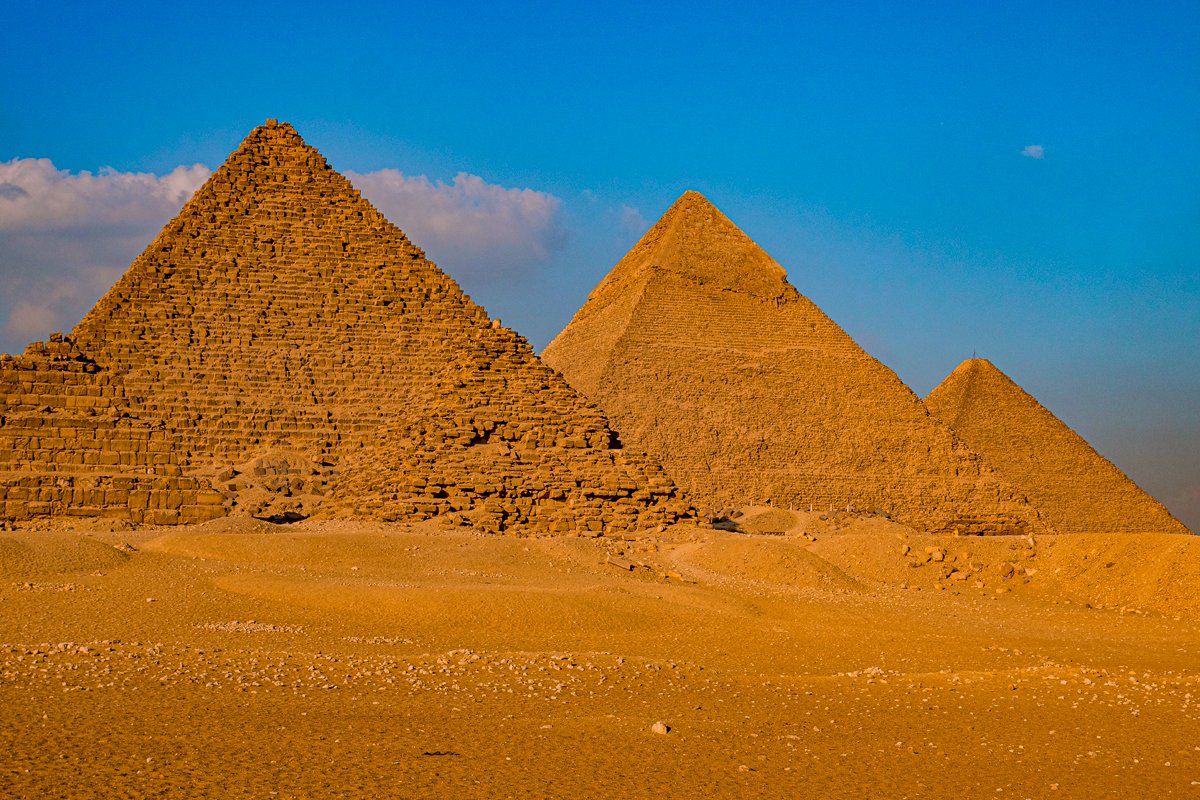
The White Desert is remarkably accessible from the Egyptian capital, which is why so many travellers combine their White Desert safari with a stay in Cairo. The drive from Cairo to Bahariya takes roughly four hours, through the fertile Nile Valley, over the desert edge, and down into the oasis. Many itineraries also continue south through Farafra and Dakhla toward Luxor and Aswan. Many travellers fly or arrive in Cairo, spend a day or two exploring the Pyramids, and then head west for a White Desert safari before returning to the city.
A common plan is: two nights in Cairo, one night in Bahariya plus the White Desert overnight camp, and a return to Cairo by late afternoon the following day. This fits neatly into a long weekend, and the contrast between the crowds of Cairo and the silence of the desert is one of the great pleasures of the trip. For a more relaxed version, add a night in Bahariya to enjoy the springs and palm groves before heading into the park.
Maddy Tours Egypt can arrange transport, guides, and permits, and can tailor the route to your schedule, whether you want the quickest possible overnight or a week-long crossing of the Western Desert.
Practical Tips for the Perfect Desert Trip
A few practical habits make all the difference. Book your White Desert safari in advance, especially in the peak season from November to February, when camps fill up. Confirm what is included in the price: transport, guides, meals, water, camp equipment, and park entry fees, so there are no surprises.
Dress in layers, because the temperature swing between afternoon and night is extreme. Eat lightly before the drive to avoid motion sickness on the gravel tracks, and sit in the front if you are prone to carsickness. Carry a small amount of cash, as the oasis villages have limited banking. And bring a sense of patience: desert time is slower than city time, and the more you let go of the clock, the more the desert gives you back.
Finally, choose your operator with care. A great White Desert safari depends on great people: guides who love the desert, respect it, and know how to make you comfortable in the wilderness. Read reviews, ask questions, and look for operators who mention small groups, responsible camping, and Bedouin staffing. This is exactly the standard that Maddy Tours Egypt aims for on every departure.
Frequently Asked Questions About the White Desert Safari
Below are answers to the questions travellers ask most often when planning a White Desert safari in Egypt.
| Question | Answer |
|---|---|
| How far is the White Desert from Cairo? | The drive from Cairo to the Bahariya Oasis, the gateway to the White Desert, takes about four hours by road. The chalk formations themselves are roughly an hour beyond the oasis. |
| Can I do the White Desert as a day trip? | Yes, a day trip from Bahariya is possible and worthwhile, but it misses sunset and the stars. Most travellers choose the overnight camp for the full experience. |
| Is it safe to camp overnight in the desert? | Yes, with a licensed operator and experienced Bedouin guides. Organised camps are safe, well-supplied, and follow responsible practices in the park. |
| What is the food like on the safari? | Traditional Bedouin food: grilled chicken or meat, rice, bread baked on the fire, salad, and sweet tea. Dietary requests should be arranged in advance. |
| Do I need a sleeping bag or tent? | No. Operators provide mattresses, blankets, and pillows for the open-air camp. A sleeping bag liner adds comfort if you wish. |
| Will I have phone reception in the desert? | Generally no, once you leave the oasis. Enjoy the digital detox and rely on your guide for everything. |
| What is the best time of year to go? | October to April is the most comfortable season. November to February offers the best stargazing, with cold but manageable nights. |
| Can children join the safari? | Yes, children enjoy the desert enormously. Inform the operator in advance so the pace and camp can be adapted for a family. |
| How much should I budget for a White Desert safari? | Prices vary with group size, season, and inclusions. Contact Maddy Tours Egypt for a current quote covering transport, guides, meals, and camping. |
| What happens if the weather turns bad? | Operators monitor forecasts and can adjust the route or timing. Sandstorms are rare but real, and safety always comes first. |
Conclusion: Book Your White Desert Safari with Maddy Tours Egypt
The White Desert is one of the most beautiful and strange places on Earth, and no amount of photographs can prepare you for the moment you first stand among the chalk spires at sunset. From the palm groves and warm springs of Bahariya to the black cones of the volcano country, the glittering ridge of Crystal Mountain, and the silent, star-filled nights, the journey is a genuine adventure that belongs on every Egypt itinerary.
Planning a White Desert safari does not have to be complicated. Maddy Tours Egypt, based in Cairo, specialises in well-organised, responsible desert trips with experienced Bedouin guides, comfortable camps, and meals cooked over the fire. Whether you want a single overnight, a two-night expedition through Agabat and Farafra, or a complete package combining Cairo, the oases, and the desert, our team will build the itinerary around you. Contact Maddy Tours Egypt today and let the White Desert safari begin.