Top 10 Must-Visit Temples in Egypt
When it comes to monumental ancient architecture, few destinations on Earth can match the temples in Egypt. Stretching along the Nile from Aswan to the Delta, these colossal sanctuaries of carved stone embody more than three thousand years of pharaonic ambition, religious devotion, and artistic brilliance. For the modern traveller they are the single most rewarding reason to visit the country, and knowing exactly which ones to see, and in what order, makes all the difference between a pleasant holiday and a once-in-a-lifetime journey.
In this guide we break down the ten essential temples in Egypt that every visitor should experience. We explain what makes each one extraordinary, how to reach it, how long to allow, what tickets cost, and how to weave them into unforgettable temple tours Egypt. Whether you are planning your first trip or your fifth, this long-form guide is meant to be saved, shared, and used as your practical checklist on the ground.
A quick note on how we built this list: every temple was scored on historical importance, state of preservation, visual impact, and how easily it fits into a well-planned itinerary. A monument can be majestic yet badly ruined, or beautifully preserved yet awkwardly remote. The ten sites that follow scored highest across every category, which is why we can confidently call them the definitive best temples in Egypt for first-time visitors and returning pilgrims alike.
How We Chose the Ten Best Temples in Egypt
Egypt is home to hundreds of temple sites, so narrowing the field to ten required a strict set of rules. We wanted geographic spread, so the list reaches from Abu Simbel in the far south to the great riverbank sanctuaries of Upper Egypt. We wanted chronological depth, so we included New Kingdom monuments, Ptolemaic temples, and Roman-era additions. And we wanted variety in experience, from rock-cut wonders and island sanctuaries to sprawling hypostyle halls.
Some famous names were hard to leave out. The Ramesseum, the mortuary temple of Ramses II, is unforgettable, but it survives in a partially ruined state and its neighbour Medinet Habu offers far more complete reliefs. The Temple of Seti I at Abydos made the final cut instead because its carvings are among the finest in the country and its king list is historically priceless. Every temple below earns its place through a combination of beauty, storytelling, and practical value to your itinerary, and together they represent the full sweep of ancient Egyptian temple building. Readers may notice a few celebrated names missing, and each has its reasons. The Temple of Esna is famous for its magnificent Ptolemaic column capitals, but only its hypostyle hall survives, buried below street level. The little chapels of the Theban necropolis are lovely in their own right, yet they lack the completeness or scale of the sites above. Where a temple's finest feature was isolated, or where visiting required a disproportionate amount of travel time, we favoured the monuments that deliver the fullest experience within the hours a traveller actually has.
The Top 10 Temples in Egypt
The ten temples below are ranked from number ten to number one. We begin with the ones best suited to a shorter visit and build up to the unmissable giants that no trip to Egypt is complete without. Each entry includes the practical details you need, and the master table at the end of this section compares all ten at a glance.
10. Abydos — The Temple of Seti I
Deep in the countryside north of Luxor, the Temple of Seti I at Abydos is one of the most sacred places in Egyptian history. The ancient Egyptians believed the god Osiris was buried here, which made Abydos a pilgrimage destination for more than two thousand years. Seti I raised his memorial temple on this hallowed ground in the nineteenth dynasty, and its limestone walls carry some of the most exquisite relief carving ever produced in ancient Egypt.
The temple's greatest treasure is the Abydos King List, a wall of royal cartouches that records the names of Egypt's pharaohs from the earliest dynasties down to Seti himself. For modern Egyptologists this inscription has been fundamental in reconstructing the country's chronology. Behind the main building lies the strange subterranean structure known as the Osireion, a colossal cenotaph of Osiris, while nearby stand the ruined remnants of the temple of Ramses II.
Abydos earns a place on this list for sheer historical weight and carving quality. It sits roughly 160 kilometres north of Luxor, so it is best visited as a full-day private excursion rather than combined with anything else. Travellers who want to go deeper than the standard circuit will find it among the most moving sites in the whole of Egypt.
Key details: Dedicated to Osiris and Seti I; built around 1285 BC; allow 3 to 4 hours including the drive from Luxor.
9. Dendera — The Temple of Hathor
Across the Nile from Qena, the Temple of Hathor at Dendera is widely considered the best-preserved late temple in Egypt. Built during the Ptolemaic and Roman periods, begun in the first century BC and finished under the Roman emperors, it survives almost completely intact, with its walls, columns, ceilings, and even the original rooftop chapels still in place. The famous Dendera zodiac, now in the Louvre, was originally carved into one of these ceilings, and a replica marks the spot.
Visitors enter through the great hypostyle hall, where twenty-four columns rise beneath ceilings that still carry traces of brilliant blue paint. Reliefs depict Cleopatra VII with her son Caesarion, while the crypts beneath the temple once held the cult statues of Hathor. The rooftop chapels offer superb views across the desert toward the Nile, and the striking image of the sky goddess Nut stretching across the ceiling makes Dendera a photographer's dream.
Dendera is easily reached as a half-day trip from Luxor, about an hour by road across the river, and it pairs beautifully with Abydos on a longer excursion. Dedicated to the goddess of love, music, and joy, it is a temple of light and colour that consistently surprises first-time visitors.
Key details: Dedicated to Hathor; built from about 54 BC onward; allow 2 hours on site.
8. Medinet Habu — The Temple of Ramses III
Hidden among the fields of the West Bank at Luxor, Medinet Habu is the mortuary temple of Ramses III, the last great warrior pharaoh of the New Kingdom. Built in the twelfth century BC, it is one of the largest and best-preserved temple complexes in Egypt, a fortified stronghold of stone whose walls still stand almost to their full height. Yet it receives a fraction of the crowds that visit Karnak, which makes it a peaceful and richly rewarding stop.
The exterior walls are covered with remarkable reliefs recording Ramses III's wars against the Sea Peoples, including the earliest known depictions of naval battles in history. Inside, the second court retains its original painted reliefs, and the small temple of Amun within the enclosure shows that Medinet Habu was also a living religious complex. Colour still clings to many of the ceiling scenes, giving visitors a rare sense of how vividly these temples looked three thousand years ago.
Medinet Habu is a favourite of photographers and historians alike, and it sits just a short drive from the Valley of the Kings on the same West Bank circuit. For anyone serious about the temples in Egypt, it is an essential stop that never disappoints.
Key details: Dedicated to Amun and Ramses III; built around 1186 to 1155 BC; allow 2 hours; combine with the other West Bank sights.
7. Kom Ombo — The Double Temple of Sobek and Horus
Perched on a sweeping bend of the Nile between Aswan and Edfu, the temple of Kom Ombo is unique among the temples in Egypt because it is a double temple, a perfectly symmetrical design dedicated to two gods. The southern half honours Sobek, the crocodile god of the river, while the northern half honours Horus, the falcon-headed god. Twin entrances, twin courts, and twin sanctuaries mirror each other along a single axis.
The setting is spectacular: the temple rises directly above the Nile, and sunset views from its columns are among the best in the country. The reliefs include a famous scene of surgical instruments, evidence that the temple was also a centre of healing, and the adjacent Crocodile Museum displays mummified crocodiles recovered from the site. A carved Nilometer on the riverbank shows how the annual flood was measured and celebrated.
Because cruise ships between Luxor and Aswan stop here routinely, Kom Ombo is one of the easiest temples to see, and most visits last about ninety minutes in the early morning or late afternoon, when the light turns the sandstone golden.
Key details: Dedicated to Sobek and Horus; built by the Ptolemies and Roman emperors; allow 90 minutes; standard stop on the Luxor to Aswan cruise route.
6. Hatshepsut Temple — Djeser-Djeseru at Deir el-Bahri
There is nothing quite like the temple of Queen Hatshepsut. Cut into the towering cliffs of Deir el-Bahri on the West Bank of Luxor, it is a marvel of design, with three colonnaded terraces rising against the sheer limestone face like a staircase for the gods. Its ancient name, Djeser-Djeseru, means "Holiest of the Holy," and even in its partly restored state it stops every visitor in their tracks.
Hatshepsut, one of Egypt's few female pharaohs, ruled as king in the fifteenth century BC and built this temple to commemorate her reign and her divine birth. The reliefs on the middle terrace recount the famous expedition to the land of Punt, complete with frankincense trees, exotic animals, and laden ships. The temple was desecrated after her death, when her stepson Thutmose III ordered her name and image erased from many monuments, a story that adds intrigue to every visit.
Long-running reconstruction work has rebuilt much of the colonnades, and the complex now welcomes thousands of visitors a day. It sits beside the Valley of the Kings and is best visited in the early morning, before the sun blasts the cliffs and the crowds arrive.
Key details: Dedicated to Amun and Queen Hatshepsut; built around 1478 to 1458 BC; allow 90 minutes; combine with the Valley of the Kings.
5. Edfu — The Temple of Horus
If you want to see what a complete Egyptian temple looks like, Edfu is the answer. Dedicated to Horus the falcon god, it is the best-preserved temple in Egypt and one of the best-preserved anywhere in the world. Because it lay buried for centuries under river silt and desert sand, its walls, roofs, and carved decoration survived almost untouched, making it a perfect lesson in ancient temple architecture.
The entrance pylon towers thirty-six metres high and is covered with colossal reliefs of the king smiting his enemies before Horus. Inside, the great hypostyle hall still carries the soot marks of ancient fires, and a black granite statue of Horus stands watch in the sanctuary. The temple walls carry the longest continuous hieroglyphic inscription ever found, including a detailed account of the Festival of the Meeting, the annual procession in which the cult statue of Horus sailed upriver to visit Hathor at Dendera.
Edfu sits on the west bank of the Nile between Luxor and Aswan and is a scheduled stop for virtually every Nile cruise, so it fits easily into any itinerary. Allow around two hours to explore the halls, the staircase, and the rooftop for a panorama of the surrounding town.
Key details: Dedicated to Horus; built 237 to 57 BC during the Ptolemaic period; allow 2 hours; standard cruise stop between Luxor and Aswan.
4. Philae — The Temple of Isis on Agilkia Island
The Temple of Isis at Philae is the most romantic of all the temples in Egypt. Standing on Agilkia Island in the middle of the Nile near Aswan, it is reached by a short motorboat ride and shimmers against the water like a mirage. It was one of the last great sanctuaries of the ancient world, where the cult of Isis survived long after the temples of Rome had closed, and it was not finally abandoned until the sixth century AD.
Philae's story is also one of modern rescue. When the Aswan High Dam threatened to drown the original island, UNESCO launched an extraordinary engineering operation in the 1970s that dismantled the entire complex and rebuilt it block by block on higher ground at Agilkia. Today the painted reliefs of Isis, Osiris, and Horus glow above the water, and the elegant Kiosk of Trajan has become one of the most photographed monuments in Egypt.
Visit early in the morning to catch the island at its quietest, or in the evening for the celebrated Sound and Light show, which turns the temple into a stage of light, music, and story against the darkening Nile.
Key details: Dedicated to Isis; built from around 380 BC to AD 400; allow 2 hours; reached by motorboat from Aswan.
3. Luxor Temple — The Heart of Ancient Thebes
In the very centre of the modern city of Luxor, the great temple of Amun rises beside the Nile and is illuminated each night until its columns glow amber above the waterfront. Built mainly by Amenhotep III and Ramses II, Luxor Temple was not a temple of daily cult but a ceremonial stage for the Festival of Opet, when the sacred image of Amun travelled from Karnak along a sphinx-lined avenue to renew the king's divine power.
Its grandeur is immediate. The towering pylon of Ramses II, flanked by seated colossi and a single surviving obelisk whose twin stands in the Place de la Concorde in Paris, opens onto a great colonnade of papyrus-bundle columns. A Roman shrine to the emperors, a chapel built for Alexander the Great, and the Mosque of Abu el-Haggag, still in use above the ancient walls, together tell the story of three thousand years of continuous sacred use.
Because it sits in the heart of Luxor, this temple is wonderfully accessible and looks at its magical best after sunset, when the floodlights turn the stone to gold. Many visitors see it twice, once by day and once by night, and it connects to Karnak along the fully excavated Avenue of Sphinxes.
Key details: Dedicated to Amun-Ra; built mainly between 1390 and 1213 BC; allow 90 minutes; link with Karnak via the Avenue of Sphinxes.
2. Abu Simbel — The Rock Temples of Ramses II
Few sights on Earth match the first glimpse of Abu Simbel. In the deep south of Egypt, just forty kilometres from the border with Sudan, the Great Temple of Ramses II was carved directly into the sandstone cliff in the thirteenth century BC, its façade guarded by four colossal seated statues of the king, each twenty metres tall. Beside it, the smaller temple of Hathor and Queen Nefertari carries the same colossal style and stands as one of the most romantic monuments ever built.
The temples are masterpieces of ancient engineering and of modern salvation alike. In the 1960s, to save them from the rising waters of Lake Nasser, an international team cut the monuments into more than a thousand blocks and reassembled them sixty-five metres higher, on an artificial hill built to resemble the original cliff. The relocation is regarded as one of the greatest archaeological feats of the twentieth century.
Abu Simbel is also famous for its solar alignment. Twice a year, on about 22 February and 22 October, the sun pierces the sanctuary and illuminates the statues of the gods seated beside Ramses II. Reaching the site means an early drive or a short flight from Aswan, but the effort is rewarded a hundred times over.
Key details: Dedicated to Ra-Horakhty, Amun, Ptah, and Ramses II; built around 1264 to 1244 BC; allow 3 hours on site; reached by road convoy or flight from Aswan.
1. Karnak — The Greatest Temple Complex in Egypt
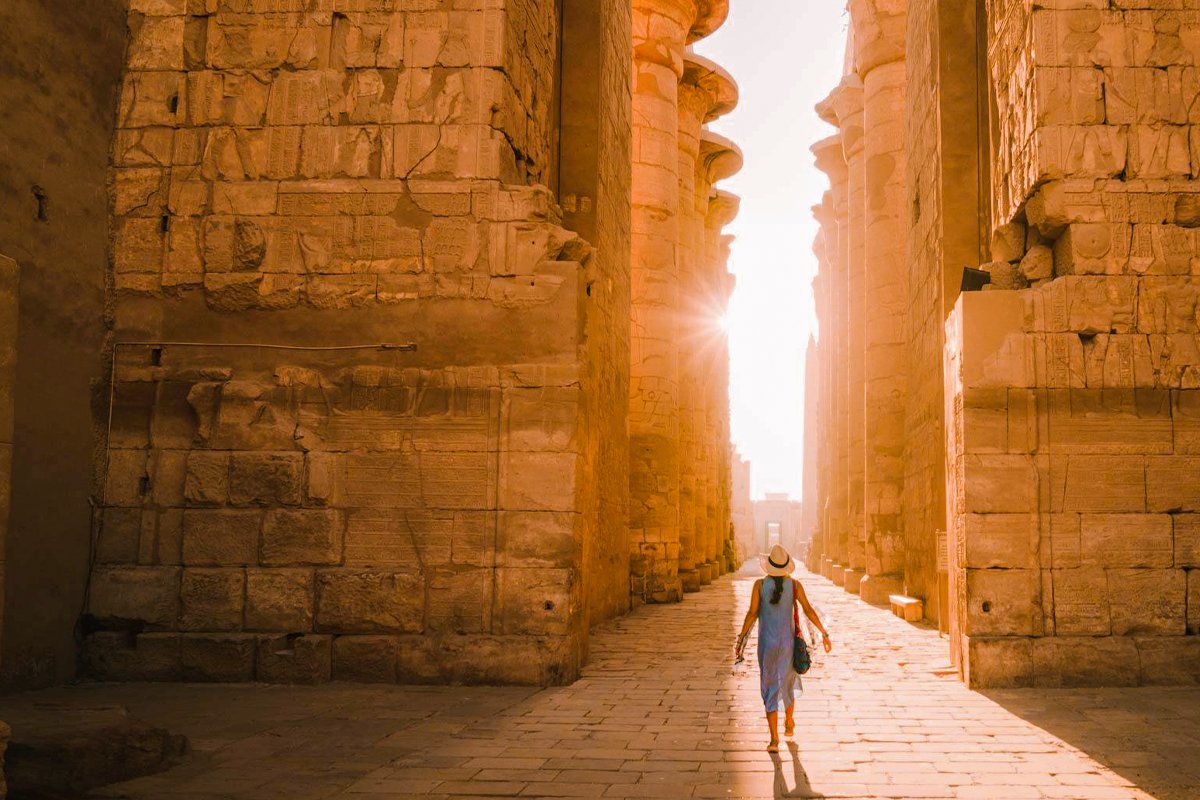
No list of the temples in Egypt would be complete without Karnak at the top. Covering more than one hundred hectares on the east bank of the Nile at Luxor, it is the largest temple complex ever built, a city of stone that successive pharaohs expanded for more than two thousand years. To walk into the Great Hypostyle Hall is to stand among one hundred and thirty-four colossal columns, some twenty-three metres high, carved with reliefs that still carry traces of their original pigment.
Karnak was the principal sanctuary of Amun-Ra, king of the gods, and the religious heart of Thebes, the capital of the New Kingdom. Its pylons, its obelisks, including the great monuments of Thutmose I and Hatshepsut, and its sacred lake all reflect the power of the priesthood that ran Egypt's state religion. Avenues of ram-headed sphinxes once lined the approach, and the long Avenue of Sphinxes that linked Karnak to Luxor Temple has now been fully excavated and reopened for walking.
Give Karnak the time it deserves. Early morning is best for the columns, when shafts of sunlight strike through the open clerestory, while the evening Sound and Light show tells the story of the temple in a dazzling spectacle. For most visitors, Karnak is the single most awe-inspiring sight in Egypt and the reason many travellers plan their whole journey around it.
Key details: Dedicated to Amun-Ra, Mut, and Khonsu; built from around 2000 BC to 30 BC; allow 3 hours; combine with Luxor Temple.
All Ten Temples at a Glance
| Temple | Location | Dedicated to | Best time to visit | Entry ticket range | Time needed |
|---|---|---|---|---|---|
| Karnak | Luxor, East Bank | Amun-Ra, Mut, Khonsu | Early morning, Oct to Apr | EGP 450 to 600 | 3 hours |
| Abu Simbel | Aswan, far south | Ra-Horakhty, Ramses II | 8 to 10 am, Oct to Mar | EGP 400 to 500 | 3 hours on site |
| Luxor Temple | Luxor, city centre | Amun-Ra | Evening, when illuminated | EGP 250 to 350 | 90 minutes |
| Philae | Aswan, Agilkia Island | Isis | Morning, Oct to Mar | EGP 250 to 350 | 2 hours |
| Edfu | Edfu, West Bank | Horus | Morning cruise stop | EGP 250 to 350 | 2 hours |
| Kom Ombo | Kom Ombo, Nile bend | Sobek and Horus | Late afternoon | EGP 200 to 300 | 90 minutes |
| Hatshepsut Temple | Luxor, West Bank | Amun, Hatshepsut | Early morning | EGP 250 to 350 | 90 minutes |
| Medinet Habu | Luxor, West Bank | Amun, Ramses III | Morning | EGP 200 to 300 | 2 hours |
| Dendera | Qena, north of Luxor | Hathor | Morning | EGP 200 to 300 | 2 hours |
| Abydos | Sohag, north of Luxor | Osiris, Seti I | Full-day excursion | EGP 200 to 300 | 3 to 4 hours incl. drive |
Ticket prices above are approximate ranges for international visitors and can change with season and official policy, so always confirm before you travel. The unified Luxor ticket also bundles several sites on the West Bank into a single pass, which can save time and money.
A Brief History of the Temples in Egypt
The story of the temples in Egypt begins in the Old Kingdom, around 2600 BC, when the pharaohs first raised monumental shrines of stone along the Nile. The earliest structures were simple, but by the Middle Kingdom the classic elements of temple design were already in place, and the building frenzy reached its golden age during the New Kingdom, roughly 1550 to 1070 BC. It was in these centuries that Karnak, Luxor, Hatshepsut's temple, Medinet Habu, and Abu Simbel rose, powered by the wealth of empire and the ambition of rulers such as Hatshepsut, Thutmose III, and the great Ramses II.
Temple building did not stop with the end of pharaonic power. Under the Ptolemies, the Greek-speaking dynasty founded by Alexander the Great's general, and later under the Roman emperors, the Egyptians raised some of the most spectacular temples ever made. Edfu, Kom Ombo, Philae, and Dendera were all built or completed in this period, when ancient rituals were performed in Greek and Roman Egypt with extraordinary fidelity to older traditions.
The temples were far more than beautiful buildings; they were the engines of Egyptian society. Each sanctuary was the house of a god, served by a great staff of priests who performed daily rituals, washed and dressed the cult statue, burned incense, and celebrated the great festivals when the statue was carried out of the temple on a sacred barque. Temples owned vast tracts of farmland, employed thousands of craftsmen and labourers, and functioned as banks, granaries, and schools. Understanding this living, working world makes the empty halls of Karnak and Edfu feel inhabited once more.
In the centuries after the rise of Christianity, the temples were gradually closed, stripped, and abandoned, and Philae was the very last to fall out of use around the sixth century AD. Buried under sand and silt, they were rediscovered by nineteenth-century travellers, deciphered by Champollion, excavated by pioneers such as Auguste Mariette, and finally rescued by modern engineers in the great UNESCO campaigns that moved Abu Simbel and Philae to safety. Their long history, from sacred sanctuary to tourist wonder, is part of what makes them so compelling today.
The Architecture of the Temples in Egypt
Almost every Egyptian temple follows the same symbolic blueprint. The visitor passes through a massive entrance pylon flanked by statues and obelisks, enters an open courtyard lined with columns, passes into a dark hypostyle hall, and finally reaches the sanctuary where the god's statue was kept. As you move inward, the floor rises and the ceiling lowers, so the journey becomes a movement from the bright, public world into the dark, sacred heart of the building. The great temple at Karnak demonstrates this principle on a staggering scale.
Every detail carried meaning. Columns were carved to imitate papyrus, lotus, or palm, plants of the marsh where creation was believed to have begun. Walls were covered in reliefs showing the king making offerings to the gods, and hieroglyphs were read from the outside in, pulling the eye toward the sanctuary. Sacred lakes held water for purification rituals, obelisks symbolised the first mound of creation, and sphinx-lined processional avenues connected the great temples to the world outside.
Temples came in two broad forms. Freestanding temples such as Edfu and Karnak were built from blocks and reached toward the sky, while rock-cut temples such as Abu Simbel were carved directly into the mountainside, their interiors chiselled out of solid stone. The Ptolemaic temples refined older styles with richer relief and more elaborate columns, and the painted ceilings and gilded sanctuaries remind us that these buildings were once vivid with colour, not the pale stone we see today. Building a great temple was an epic feat of logistics. Blocks of sandstone and limestone were quarried, ferried down the Nile on barges, and lifted into place on ramps of earth and brick, while teams of draughtsmen and carvers decorated the walls with a precision that still astonishes modern stonemasons. The finished surfaces were painted in vivid colours, the sanctuaries sheathed in gold, and the doorways crowned with winged sun discs. Even after thousands of years, traces of this original brilliance survive in the ceilings of Dendera and the depths of the Karnak hypostyle hall.
Practical Tips for Visiting Temples in Egypt
The best season for visiting the temples in Egypt is October through April, when temperatures are mild and the sites are at their most pleasant. Wherever you are, plan your visits for the early morning or late afternoon to avoid the midday heat and the harshest light. Luxor and Aswan in midsummer can be brutally hot, so the cooler months are strongly recommended for first-time visitors.
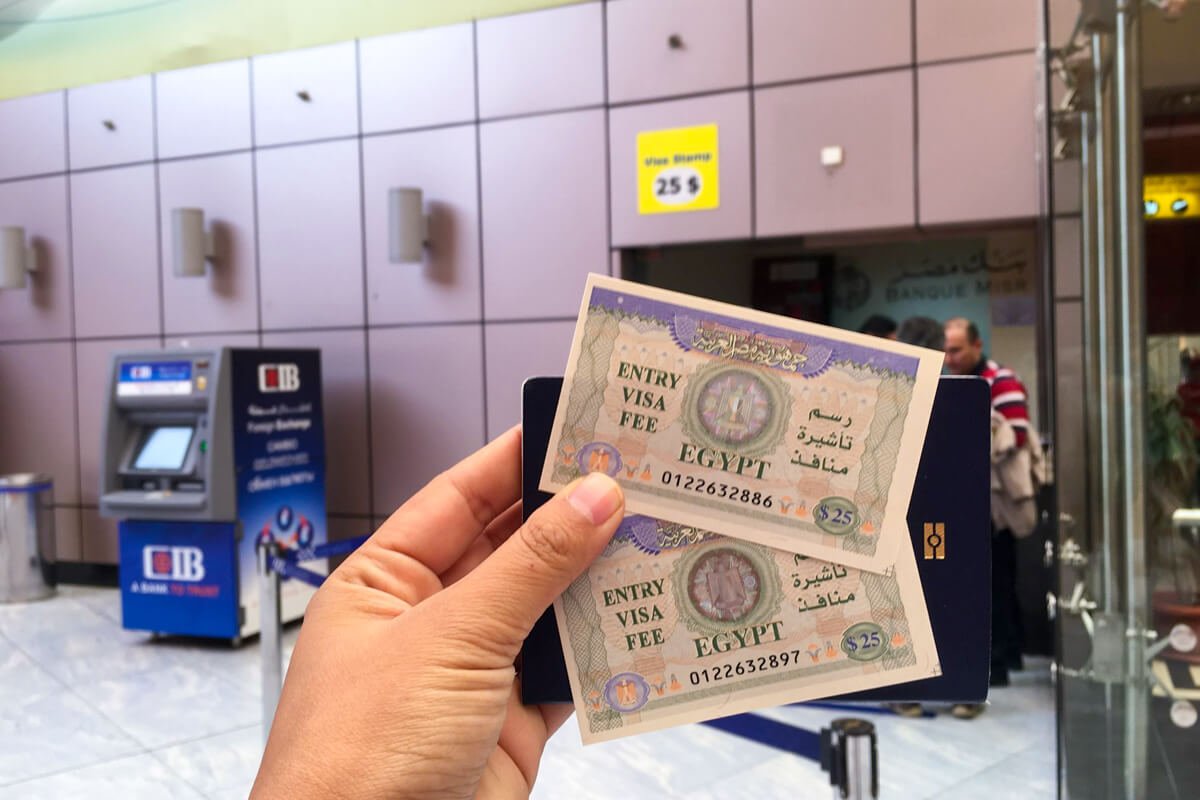
Dress modestly, wear comfortable walking shoes, and bring a hat, sunscreen, and plenty of water, because shade is scarce on the open West Bank sites. Photography is allowed at most temples, but some charge a small camera fee, and drones are prohibited. Carry your passport or a copy of it when collecting tickets, as several sites require ID, and always carry small notes in Egyptian pounds for incidental expenses. Consider booking tickets online in advance wherever possible, especially for Abu Simbel and the sound-and-light performances, and ask whether your hotel or tour operator offers the unified West Bank pass, which saves both money and queuing time. Peak season in Luxor and Aswan runs from November through February, so an early start is not just about the heat; it is also about enjoying the columns and reliefs in relative peace before the coach parties arrive.
Hiring a licensed Egyptologist guide transforms the experience. Reliefs and hieroglyphs are meaningless without context, and a good guide turns a walk among columns into a story of gods, kings, and festivals. For the sound-and-light crowd, the evening shows at Karnak and Philae are the most polished, while Edfu and Kom Ombo are quieter and best visited during a Nile cruise. Above all, allow more time than you think you need, because these temples reward slow, patient looking.
- Start early: most sites are at their best before 10 am.
- Check the sound and light schedules before you book.
- Carry water, sunscreen, a hat, and comfortable shoes.
- Keep small change for parking, boatmen, and refreshments.
- Combine East Bank and West Bank visits on separate days.
Insider tip: on the West Bank at Luxor, visiting Medinet Habu before the Valley of the Kings means you will often have the temple almost to yourself, while Karnak is far more atmospheric in the first hour after opening.
Best Temple Tours in Egypt with Maddy Tours Egypt
Maddy Tours Egypt is a Cairo-based travel operator specialising in private, guided journeys to the great temples in Egypt. Rather than herding travellers through packed group itineraries, Maddy Tours designs each trip around you, with door-to-door transport, hand-picked hotels, and an Egyptologist guide who brings every relief and hieroglyph to life. Every tour is built on a simple promise: you see the temples at the right time of day, with the right expert, and without a single logistical worry.
Our most popular temple tours combine Cairo with Luxor and Aswan by road, rail, or Nile cruise. From the capital you fly or ride overnight south, then spend your days among the temples of the East and West Banks, cruise past Edfu and Kom Ombo, sail a felucca on the Nile, and rise before dawn for the spectacular drive to Abu Simbel. Extensions can add Dendera and Abydos for travellers who want to see all ten temples on this list, or a hot-air balloon flight over the West Bank for the adventurous.
Everything can be customised. Whether you want a whirlwind three-day highlights tour, a relaxed week-long cruise, or a deep two-week exploration, we handle the flights, transfers, tickets, guides, and meals so you can focus entirely on the wonders in front of you. Private tours, small groups, and family-friendly itineraries are all available, and our team in Cairo is on call throughout your journey. A typical day on our signature temple tour begins before sunrise with coffee and a boxed breakfast, then a smooth, air-conditioned drive to Abu Simbel timed to catch the temple front in soft morning light. Afternoons are reserved for the shaded halls of Edfu and Kom Ombo, and evenings end with dinner overlooking the illuminated Luxor Temple. Every transfer is handled by our own professional drivers, and each guide is a qualified Egyptologist, so the experience is seamless from the moment we meet you at the airport to the final farewell.
Why travellers book with Maddy Tours Egypt: private and flexible itineraries, licensed Egyptologist guides, skip-the-line arrangements where possible, transparent pricing, and a local team available around the clock during your trip.
Sample Temple Tours in Egypt
| Duration | Route | Temples covered |
|---|---|---|
| 3 days | Luxor and Aswan | Karnak, Luxor Temple, Hatshepsut, Medinet Habu, Philae, Kom Ombo, Edfu |
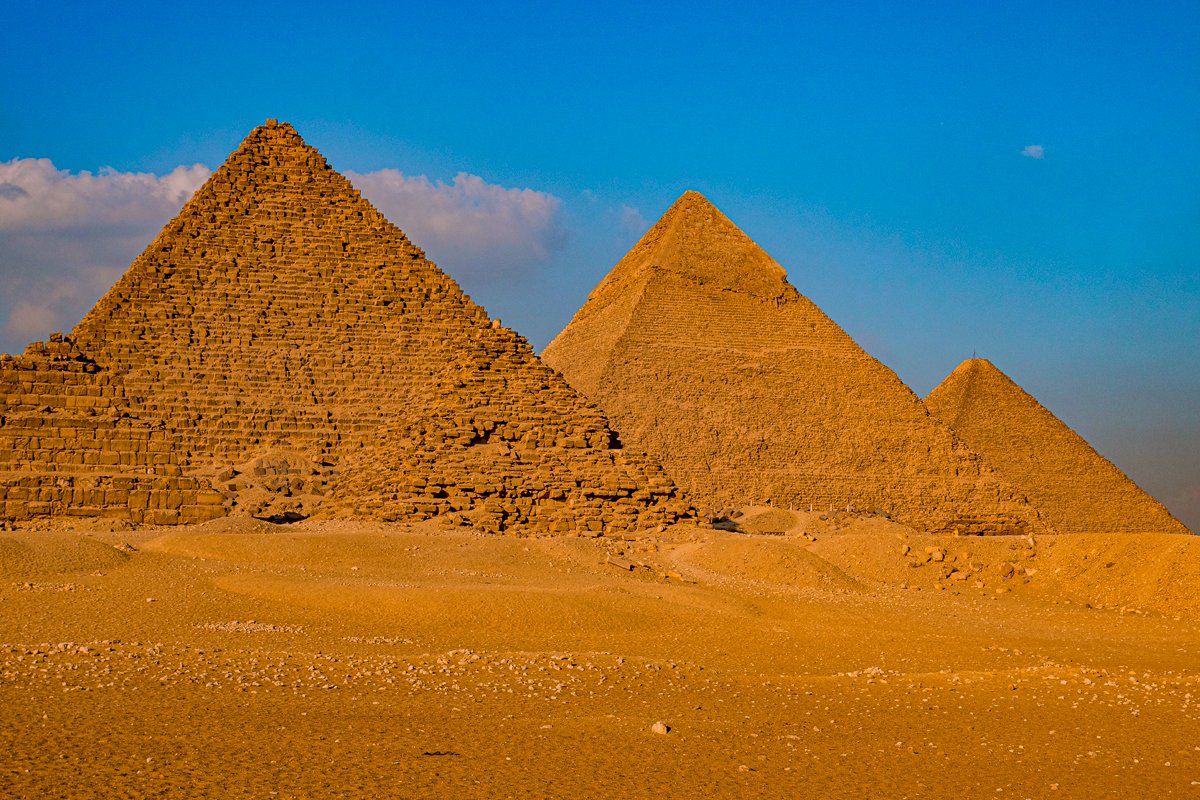
| 5 days | Cairo, Luxor, Aswan | All of the above plus the Giza pyramids and Abu Simbel |
| 7 days | Full Nile circuit | Every temple in this guide except Abydos and Dendera |
| 8 days | Extended classic | All ten temples in this guide, including Abydos and Dendera |
Every itinerary is delivered as a private or small-group experience, and we are happy to adjust any day to your pace, your interests, and your budget. Request your free itinerary today and we will tailor a plan around the temples you most want to see.
FAQ: Visiting the Temples in Egypt
These are the questions travellers ask us most often about planning temple tours in Egypt.
| Question | Answer |
|---|---|
| What is the best time of year to visit the temples in Egypt? | October to April offers the mildest weather. Within the day, visit in the early morning or late afternoon to beat the heat and the largest crowds. |
| Can I visit Karnak and Luxor Temple in one day? | Yes. They sit about three kilometres apart on the East Bank of Luxor, linked by the Avenue of Sphinxes, and are easy to see together. |
| How do I get to Abu Simbel? | By road in a security convoy from Aswan, about three hours each way, or by a short domestic flight. Both options leave very early in the morning. |
| Do I need a guide to visit the temples? | A guide is not required, but a licensed Egyptologist dramatically improves the experience by explaining the reliefs, gods, and history. |
| What should I wear and bring? | Modest clothing, a hat, sunscreen, water, and comfortable shoes. Carry your passport for ticketing and small notes in Egyptian pounds. |
| Are the Sound and Light shows worth it? | Yes, especially at Karnak and Philae, where the shows are the most polished and the storytelling is superb. |
| How much time do I need for a temple tour of Egypt? | Five to seven days covers the major highlights comfortably; eight days or more allows you to add Abydos, Dendera, and a Nile cruise. |
If your question is not answered above, our team at Maddy Tours Egypt is happy to advise you on building the perfect temple tour for your dates, budget, and travel style.
From the river islands of Philae to the colossal cliffs of Abu Simbel, the temples in Egypt are far more than monuments. They are messages carved in stone, three thousand years of belief, power, and artistry waiting to be read by anyone willing to look closely. Ten temples, one unforgettable journey, and a country that has been perfecting the art of wonder since the dawn of civilisation.
When you are ready to stand beneath the columns of Karnak or watch the sunrise paint Abu Simbel gold, let Maddy Tours Egypt take care of the rest. Contact us today for a free, tailor-made quote, and we will craft a private temple tour around the exact sites that call to you.