Cairo in 3 Days: Pyramids, Giza Plateau & Old Cairo
Cairo overwhelms the senses, delights the curious, and quietly rewrites everything you thought you knew about ancient history. For most travelers, the challenge is not finding things to do in Cairo — it is squeezing the highlights into a short visit. That is why a carefully planned Cairo itinerary 3 days is worth its weight in gold: in three full days you can stand before the only surviving Wonder of the Ancient World, wander the world's oldest continuously inhabited neighborhood, bargain in a medieval bazaar, and cruise the Nile at sunset. This guide shows you how, with practical advice on tickets, dress, food, safety, and getting around.
Why Three Days in Cairo Is the Perfect Amount of Time
Some cities reward a slow, meandering approach. Cairo is not one of them. The city is vast, sprawling, and famously traffic-heavy, so a little structure goes a long way. Three days is the ideal length: it covers the iconic sights without the exhaustion of a rushed 48 hours, and it is realistic whether you are starting a longer Egypt tour, connecting between Luxor and the Red Sea, or simply taking a short break in the capital.
Think about what a well-designed Cairo itinerary 3 days needs to include. On the pharaonic side, the Pyramids of Giza and the Sphinx are non-negotiable, and the Grand Egyptian Museum and the Egyptian Museum both deserve consideration, though time will likely force you to choose. On the historical side, Coptic Cairo tells the story of Egypt's ancient Christian community, while Islamic Cairo — the Citadel, the Mohamed Ali Mosque, Khan El Khalili, and Al-Muizz Street — showcases more than a thousand years of art and architecture. No trip is complete without a relaxed evening on the Nile, and three days lets you distribute these experiences sensibly.
One note before we begin: pace yourself. This itinerary is intentionally realistic, built with drive times, ticket queues, and the heat in mind, so you actually enjoy each day rather than surviving it. The goal of any Cairo itinerary 3 days is not to tick boxes — it is to leave with memories that last a lifetime.
Overview: Your Cairo Itinerary 3 Days at a Glance
Before the day-by-day detail, here is the big picture. Day one is all about the icons: the Pyramids of Giza, the Sphinx, and the desert viewpoints that frame them. Day two moves through the heart of old Cairo, from Coptic Cairo's ancient churches to the monuments of Islamic Cairo, ending with an evening in the city's most famous bazaar. Day three pairs Saqqara, Dahshur, and Memphis with the Grand Egyptian Museum or the Egyptian Museum, closing with a Nile dinner cruise. The table below summarizes the plan.
| Day | Morning | Afternoon | Evening |
|---|---|---|---|
| Day 1 — Giza Icons | Pyramids of Giza (Great Pyramid, Khafre, Menkaure) and the Giza Plateau panorama | The Great Sphinx and the Solar Boat Museum or Sphinx-side lunch | Sunset viewpoint at the Giza Plateau or a sound and light show |
| Day 2 — Old Cairo | Coptic Cairo: the Hanging Church, Ben Ezra Synagogue, and Roman fortress | Islamic Cairo: the Citadel and the Mohamed Ali Mosque | Khan El Khalili and a walk down Al-Muizz Street |
| Day 3 — Ancient Capital & Museums | Saqqara step pyramid complex and the Tomb of Ti | Dahshur's Red and Bent Pyramids, plus Memphis open-air museum | The Grand Egyptian Museum or Egyptian Museum, followed by a Nile dinner cruise |
This structure works because it groups sights by geography: Giza on the western edge saves hours of crossing traffic, Old Cairo's treasures are clustered for easy foot and short-hop exploring, and day three pairs the southern burial grounds with the museum experience. Keep this overview in mind as we walk through each day in detail.
Day 1: The Pyramids of Giza and the Giza Plateau
There is no correct way to describe the moment you first see the Pyramids of Giza. Standing at the foot of the Great Pyramid, watching tourists shrink to the size of ants against its base, you understand why the ancient Greeks listed it as the single surviving Wonder of the Ancient World. Built more than 4,500 years ago as the tomb of the pharaoh Khufu, it rises roughly 139 meters (455 feet) and held the title of the tallest man-made structure on Earth for nearly four millennia.
Start early — very early. The gates open around 8:00 AM, and arriving then means soft golden light, thin crowds, and short ticket lines. Arrange a driver or guided tour to collect you around 7:00 AM; the drive from central Cairo or Zamalek takes 40 to 60 minutes depending on traffic.
The Great Pyramid of Khufu
The Great Pyramid deserves slow, deliberate time. It is made of roughly 2.3 million blocks of stone, each weighing an average of 2.5 tons; the polished limestone casing that once made it gleam was stripped in the Middle Ages, which is why it looks stepped and weathered today. If you are reasonably fit and not claustrophobic, an interior visit is unforgettable — but tickets are limited and sold separately, so buy them first thing in the morning. Inside, you climb a narrow passage to the Grand Gallery and the King's Chamber, where a cracked granite sarcophagus sits in the darkness; the visit takes 20 to 40 minutes and is hot and humid. For many it is the highlight of the trip, while for others the exterior is enough — judge your own comfort.
Khafre and Menkaure, the Companion Pyramids
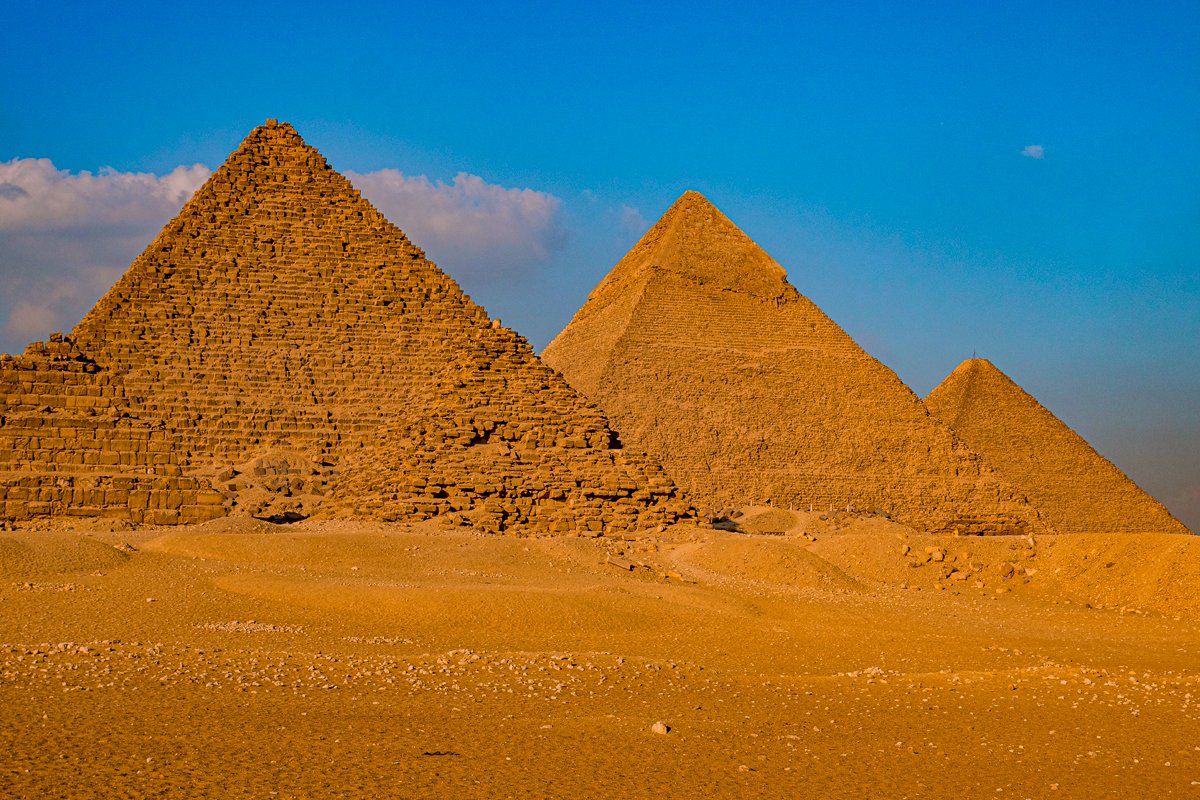
After the Great Pyramid, give the rest of the plateau its due. The Pyramid of Khafre, built by Khufu's son, looks like the tallest of the three because it sits on higher ground and retains a patch of original limestone casing near the summit. The Pyramid of Menkaure is the smallest, with partially dressed granite blocks hinting at a finer finish. Between them lie the queens' pyramids, the boat pits, and the causeways that carried royal funeral processions from the Nile valley to the desert heights. Walking the plateau is one of the great experiences of any Cairo itinerary 3 days, so wear proper shoes, carry water, and let yourself simply stand and stare.
The Great Sphinx
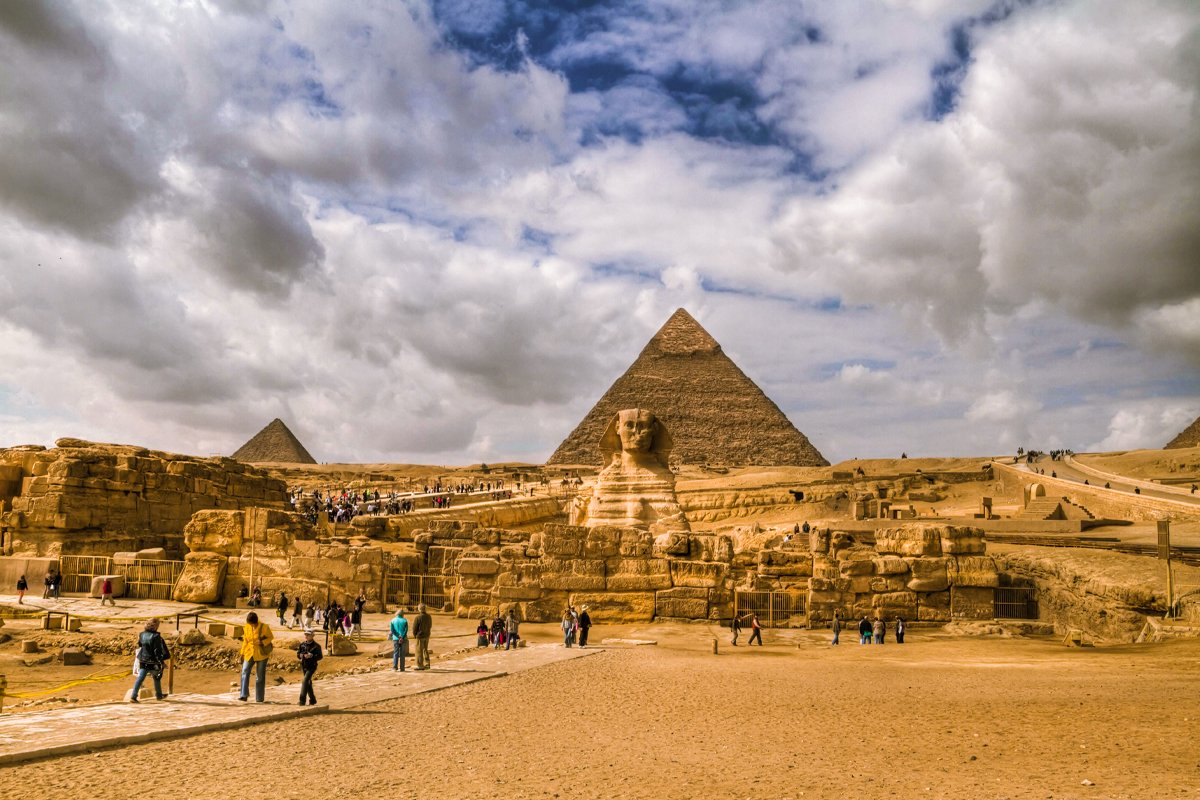
No visit to the Pyramids of Giza is complete without the Great Sphinx, the colossal limestone creature with the body of a lion and the head of a pharaoh — most believe the face is that of Khafre himself. Carved directly from the bedrock, it stretches 73 meters (240 feet) long and stands 20 meters (66 feet) tall. A dedicated viewing area offers an unobstructed perspective, and a short walk along the front of the plateau shows how carefully the ancient architects aligned the Sphinx with the pyramids behind it. Standing before it, staring east toward the rising sun, you will feel its magnetism.
Panorama Point and Optional Extras
Before you leave, make time for the panorama viewpoint, the classic spot where all three pyramids line up for that postcard photograph. If you have energy to spare, add the Solar Boat Museum, which houses the cedar funerary boat of Khufu reconstructed from more than 1,200 pieces discovered in 1954. Camel and horse rides are available — fun in moderation, but agree on the price before you mount and expect to tip. The plateau can also be revisited in the evening for the sound and light show.
Lunch and the Afternoon
By early afternoon the plateau is busy and hot, so break for lunch. Choose a restaurant with a pyramid view if you can — several cafes across the road serve excellent Egyptian food with the Great Pyramid as a backdrop. After a relaxed meal, return to your hotel for a rest or explore the Sphinx Temple and the Valley Temple of Khafre, whose massive granite columns offer a quieter look at ancient ritual. End Day 1 with a simple dinner near your hotel and an early night — you have a big two days ahead.
Day 2: Coptic Cairo and Islamic Cairo
Day two of your three-day Cairo plan leaves the desert behind and dives into the city's layered history. Cairo is sometimes called the "City of a Thousand Minarets," but it is also home to some of the most important Christian sites in the world. This is the day to walk narrow stone lanes, smell incense in ancient churches, climb to a fortress mosque with a panoramic view, and finish in one of the most famous bazaars on the planet — best done moving from south to north through the historic heart of the city.
Coptic Cairo: The Heart of Egypt's Christian Heritage
Coptic Cairo is a compact, walled pocket of the old city — the "Christian quarter" — packing astonishing history into a few hundred square meters. The star attraction is the Hanging Church, formally the Church of the Virgin Mary, suspended over the gatehouse of the Babylon Fortress, a Roman stronghold built around the time of Christ. A few steps away, the Church of Saints Sergius and Bacchus is said to mark where the Holy Family rested during their flight into Egypt, while the Ben Ezra Synagogue, one of the oldest Jewish houses of worship in Egypt, is famous for the medieval Cairo Geniza documents discovered in its storeroom.
The district also preserves the Babylon Fortress's massive round towers and a small museum of Coptic art. Allow two to three hours here, visiting in the morning when light streams through the church windows. The area sits at the Mar Girgis Metro stop, making it one of the most accessible sites in the city.
Afternoon: The Citadel and the Mohamed Ali Mosque
From Coptic Cairo, travel north to the Citadel of Salah El-Din, the fortified hilltop complex built in the twelfth century to defend Cairo against the Crusaders. Rising more than 80 meters above the city, it offers the single best panorama of Cairo — on a clear day you can even see the Pyramids of Giza shimmering on the horizon. The centerpiece is the Mohamed Ali Mosque, also called the Alabaster Mosque, commissioned by Muhammad Ali Pasha in the nineteenth century; its vast central dome, twin minarets, and Ottoman-Turkish style make it look like something lifted from Istanbul, and the courtyard's bronze clock tower — a French gift exchanged for the Luxor obelisk now on the Place de la Concorde — rewards a closer look.
The complex also holds the Mosque of Sultan al-Nasir Muhammad and the Military Museum, worth a quick look if time allows. Plan for two to three hours, and remember the mosque requires modest dress — covered shoulders and knees, and head coverings for women in the prayer hall. Wear comfortable shoes, because the complex involves steps, ramps, and plenty of open sun.
Evening: Khan El Khalili and Al-Muizz Street
As the sun lowers, make your way to the beating heart of Islamic Cairo: the legendary Khan El Khalili bazaar, founded in the fourteenth century, a warren of covered lanes that has traded in spices, perfumes, gold, and textiles for more than six hundred years. Bargaining is part of the experience — start at roughly half the quoted price. The bazaar is also home to the famous El Fishawy café, an open-air institution serving mint tea and shisha for over two centuries, and a seat there after sunset is among the most atmospheric moments in the city.
Do not leave without walking Al-Muizz Street, the pedestrianized thoroughfare the Aga Khan Award for Architecture once called the finest street in the Islamic world — an open-air museum of Mamluk and Ottoman architecture lined with monumental gates, caravanserais, and mosques. The Qalawun Complex, the Sabil-Kuttab of Katkhuda, and the Bab Zuwayla gate all deserve your attention, and the street is magical after dark, when monuments are floodlit and cafes spill onto the pavement. Expect three to four hours here.
Day 3: Saqqara, Dahshur, Memphis, and the Great Museums
The final day of your three-day Cairo plan is the most intellectually rich, because it connects the story of the pyramids across generations. Travel roughly 25 kilometers south to the great necropolis of Saqqara, then continue to the bent and red pyramids of Dahshur and the ancient capital of Memphis. In the evening, return to the city for the museum of your choice and a farewell dinner cruise on the Nile.
Saqqara: The Step Pyramid of Djoser
Saqqara is Egypt's largest archaeological site, a vast cemetery that served the ancient capital of Memphis for thousands of years. The defining monument is the Step Pyramid of Djoser, built around 2650 BC by the architect Imhotep — the oldest colossal stone building in history, the moment Egyptian builders first moved from mud-brick mastabas to monumental stone, and the direct ancestor of every pyramid that followed. Its six stepped tiers, rising about 60 meters, sit within a vast enclosure wall, and a circuit of the complex reveals the courtyards and shrines where pharaoh and court once performed rituals of rebirth.
Recent restoration has made the Step Pyramid dramatically more impressive than a decade ago. Combine it with the Tomb of Ti, an Old Kingdom mastaba whose carved reliefs show farming, fishing, and boat-building with such vitality that the figures seem ready to move. If time allows, the Serapeum — a vast underground gallery of giant granite sarcophagi once thought to hold sacred bulls — is one of the most eerie, memorable spaces in Egypt. Allow two to three hours, and use a guide who knows the site, since its layout can confuse even prepared travelers.
Dahshur: The Bent and Red Pyramids
A short drive from Saqqara brings you to Dahshur, a quieter royal necropolis where two pyramids show Egypt's builders solving engineering problems in real time. The Bent Pyramid, built by the pharaoh Sneferu, is unique in Egypt for its strange double slope — steep 54 degrees at the base, then abruptly shallower, apparently changed mid-construction to stop the structure collapsing under its own weight. This makes it a crucial experiment between the step pyramid of Djoser and the smooth pyramids of Giza. It retains much of its original polished limestone casing, and visitors can descend into its interior via a newly opened corridor.
Close by, the Red Pyramid takes its name from the reddish limestone of its core and stands as the world's first successful true pyramid with smooth, angled sides. Sneferu, the father of Khufu, built both, and walking between them on this quiet, sandy site gives an extraordinary sense of ancient construction ambition. The site is far less crowded than Giza — a favorite among photographers. Allow one to one and a half hours here.
Memphis: The Ancient Capital
The final stop on this south-of-Cairo circuit is Memphis, the ancient capital founded by King Narmer around 3100 BC, when Upper and Lower Egypt were first united. Little of the ancient city remains — most of its stone was recycled into later buildings — but the open-air museum preserves the most spectacular survivor: a colossal limestone statue of Ramses II lying in a covered hall, still awe-inspiring in scale and detail. Around it stand a smaller alabaster sphinx, fragments of other statues, and a huge fallen colossus, all in a palm-shaded garden. Memphis ties the story together: this was the seat of power that ruled the pyramid builders, and standing here after visiting their tombs completes the circle. Allow forty-five minutes to an hour, and use the site cafe before heading back toward the city.
The Grand Egyptian Museum vs. the Egyptian Museum
No three-day Cairo plan is complete without a museum visit, and here you face one of the great decisions of any Egypt trip: the Grand Egyptian Museum or the Egyptian Museum. Both are extraordinary, but they tell the story differently, and the right choice depends on your interests and tolerance for crowds.
The Grand Egyptian Museum, known universally as the GEM, rises from the desert edge just two kilometers from the Pyramids of Giza. The largest archaeological museum in the world, it is a monument in its own right — a vast, light-flooded building whose grand staircase ascends past colossal statues before opening onto a hall where the full statue of Ramses II dominates the atrium. Its centerpiece is the complete tomb treasure of Tutankhamun — the golden mask and more than 5,000 objects — displayed together for the first time in history. For most first-time visitors with three days, the GEM is the strongest choice, especially given its proximity to the plateau. Check the phased opening status before your visit, and note that the Tutankhamun galleries are time-limited.
The Egyptian Museum in Tahrir Square is the grand old dowager of Cairo's museums, a beautiful pink neoclassical building that has dazzled visitors since 1902. Its charm lies in its old-fashioned, treasure-cave atmosphere: two floors packed with more than 120,000 objects, from the Narmer Palette that records Egypt's unification to the eerie royal mummies gallery. Many treasures, including the golden mask and royal mummies, are moving to the GEM, so the collection is evolving — yet the museum remains essential for history lovers, particularly for its jewelry, furniture, and daily-life objects. For a balanced three-day plan, most travelers should choose one.
Whichever you choose, reserve the late afternoon for it, and better still, book a guided tour that skips the queues. Your third evening should end in the most classic Cairo way possible: aboard a Nile dinner cruise, with the city's lights shimmering on the water as music and dinner begin.
Practical Tips for Your Cairo Itinerary 3 Days
The monuments do the heavy lifting, but logistics make or break any Cairo itinerary 3 days. This section gathers the practical knowledge experienced travelers wish they had known before arriving — from getting around and buying tickets to dressing correctly and eating well.
Getting Around Cairo
Cairo is a huge, sprawling city of more than 20 million people, and traffic is its defining daily struggle — a journey that looks short on a map can take an hour in reality. Your best options are private drivers and tours, which handle logistics, parking, and negotiation; ride-hailing apps such as Uber and Careem, widely used, reasonably priced, and much safer than street taxis; and the Cairo Metro for a few specific journeys, such as the Mar Girgis stop serving Coptic Cairo. For Saqqara, Dahshur, and Memphis, a private driver or organized tour is by far the easiest option. Always confirm prices and itineraries in advance.
Tickets, Queues, and the Pyramid Pass
Ticket management is one of the biggest stress points of a Cairo visit, so plan ahead. The Pyramids of Giza general admission does not include the Great Pyramid interior, the Solar Boat Museum, or the Sphinx enclosure — these require separate tickets, and the Great Pyramid interior tickets are limited and sell out quickly, so arrive at the box office early. The same applies at Saqqara, where entry to the Step Pyramid enclosure is priced separately. Carry small-denomination Egyptian pounds in cash for tickets, since many site offices do not accept cards, and keep your ticket with you throughout your visit. For the Grand Egyptian Museum, book timed entry tickets online in advance. Student discounts are available with a valid international student card.
Dress Code and the Heat
Egypt is a hot country, and Cairo is at its hottest between May and September, when afternoon temperatures routinely pass 35°C (95°F). Dress in light, loose, breathable fabrics and pale colors, with a wide-brimmed hat and good sunglasses; sunscreen is non-negotiable, and carry a refillable water bottle. Modesty matters at religious sites: cover shoulders and knees in mosques such as the Mohamed Ali Mosque and in Coptic churches, and women should carry a scarf for head covering inside mosques. Comfortable walking shoes are essential every day of your visit, since the ancient sites involve sand, loose stones, and steep passages, while the bazaar quarter means plenty of standing and walking on uneven stone.
Food: What and Where to Eat
Cairo is one of the great food cities of the world, and your three days should treat eating as part of the itinerary. Start with an Egyptian breakfast — ful medames (slow-cooked fava beans), taameya (Egyptian falafel), and warm flatbread. At lunch, look for koshari, the beloved national dish of lentils, rice, pasta, chickpeas, and crispy onions under spicy tomato sauce; the classic koshari chains are cheap, fast, and consistently good. For dinner, seek out Egyptian grill houses serving kofta and shish tawook, seafood restaurants along the corniche, and traditional restaurants where you can try molokhia and pigeon stuffed with rice. Tap water is not safe to drink in Egypt; stick to bottled or filtered water, and be sensible with ice at street stalls. If you have dietary requirements, state them clearly — Egypt is welcoming to vegetarians, but the default menu is meat-heavy.
Safety, Scams, and Sensible Advice
Cairo is generally safe for tourists, and millions visit every year without incident, but it pays to be street-smart. Keep valuables secure, avoid flashing cash or jewelry, and use the hotel safe for passports. The main nuisance is the hassle factor: touts, unlicensed guides, and souvenir sellers can be pushy at the big sites. Politely but firmly say "no, shukran" and keep walking, never engage with anyone promising a "special price," and be wary of those offering to take your photo "for free." At the Pyramids of Giza, agree on the exact price and duration of any camel or horse ride before you mount. For peace of mind, book through a reputable operator like Maddy Tours Egypt, which handles transport, tickets, and licensed guiding. Modest clothing and a respectful attitude are welcomed everywhere, and a smile goes a long way in a country famous for its hospitality.
Where to Stay: The Best Hotel Areas
Where you sleep shapes how your Cairo itinerary 3 days flows, because the city's size makes location a real strategic decision. For most first-time visitors, the best base is Zamalek, the leafy, upscale island in the Nile — safe, walkable, packed with excellent cafes and restaurants, and reasonably central to both the Pyramids and Old Cairo. The Giza side suits travelers who want to wake near the pyramids and prioritize sunrise visits and the Grand Egyptian Museum, with several pyramid-view hotels. Downtown and Tahrir Square are convenient for the Egyptian Museum, the Nile cruises, and easy metro access, though noisier. Whichever area you choose, book centrally and confirm airport transfers in advance — a smooth arrival and departure removes two of the biggest stresses of the trip.
Sample Budget for Your Cairo Itinerary 3 Days
Money matters, so here is a realistic budget snapshot. Prices have risen with inflation and ticket prices change, so treat these figures as planning guides rather than fixed costs. The table gives a rough per-person idea across budget, mid-range, and comfort levels, excluding international flights.
| Item | Budget | Mid-Range | Comfort |
|---|---|---|---|
| Accommodation (per night) | $15–$35 | $40–$100 | $120–$300 |
| Guided tours and drivers (per day) | $20–$40 | $50–$90 | $100–$200 |
| Meals (per person, per day) | $10–$20 | $25–$45 | $60–$120 |
| Site tickets (per person, per day) | $15–$25 | $15–$40 | $30–$70 |
| Daily total (per person) | $60–$120 | $130–$275 | $310–$690 |
The biggest cost variable is whether you hop around by ride-hailing app and taxi, or book private tours with a driver and guide. For most travelers on a Cairo itinerary 3 days, the sweet spot is two or three private tours for the far-flung sights — Giza, Saqqara/Dahshur/Memphis, and the museum — and ride-hailing apps for short city hops like Coptic Cairo to the Citadel. Tours that include entrance fees, transport, and an Egyptologist guide are well within reach and eliminate the friction of haggling with taxi drivers and ticket offices.
Top Attractions and Ticket Prices at a Glance
To keep your planning simple, here is a handy reference covering the headline attractions in this itinerary, with approximate admission prices per person. Prices are indicative — Egyptian sites update their tariffs regularly.
| Attraction | Approximate Entry Fee | Notes |
|---|---|---|
| Pyramids of Giza (Giza Plateau) | $8–$12 (EGP 300–540) | Includes plateau access; interior of the Great Pyramid is a separate ticket, limited and often sold out by midday |
| Great Pyramid interior | $15–$25 (EGP 600–1000) | Narrow, hot, and steep passage; arrive early to secure a ticket |
| Great Sphinx enclosure | Included or low additional fee | Dedicated viewing area; check current access rules at the gate |
| Solar Boat Museum | $8–$12 | Houses Khufu's reconstructed cedar boat beside the Great Pyramid |
| Saqqara (Step Pyramid complex) | $10–$15 | Separate tickets for the pyramid interior and the Serapeum if open |
| Dahshur (Bent and Red Pyramids) | $8–$12 | Quiet site; interior entry possible at the Bent and Red Pyramids |
| Memphis Open-Air Museum | $8–$12 | Home of the colossal Ramses II statue and alabaster sphinx |
| Citadel of Salah El-Din and Mohamed Ali Mosque | $10–$15 | One ticket covers the whole Citadel complex |
| Coptic Cairo churches | Free (donations welcome) | Hanging Church, Saints Sergius and Bacchus, Ben Ezra Synagogue |
| Khan El Khalili bazaar | Free | Bargain hard; visit El Fishawy café for mint tea |
| Grand Egyptian Museum | $25–$40 (tiered by galleries) | Book timed tickets online in advance; Tutankhamun galleries limited |
| Egyptian Museum (Tahrir) | $10–$20 | Collection being consolidated at the GEM; royal mummies and Tutankhamun relics may have moved |
| Nile dinner cruise | $25–$70 | Dinner, live music, and a belly-dancing show; book ahead for window tables |
Most sites accept Egyptian pounds in cash, so withdraw enough at the airport or an ATM and carry small notes. Student cards can cut costs, and some attractions offer combo tickets. When in doubt, ask your Maddy Tours Egypt guide — they know the current pricing and can often arrange tickets ahead of time.
Alternative: When Should You Add a Fourth Day?
If your schedule allows a fourth day, a few additions transform the trip from great to exceptional. A morning at the Egyptian Museum in Tahrir plus an afternoon at the Museum of Islamic Art gives you the old-museum experience without rushing. The National Museum of Egyptian Civilization, near Coptic Cairo, is a modern masterpiece whose centerpiece is the Royal Mummies Hall — the final resting place of many of Egypt's greatest pharaohs, including Ramses II. A full day at the Grand Egyptian Museum is another excellent plan, since the GEM's collections deserve more than an afternoon. For something lighter, take a felucca sail at sunset on the Nile, or visit the eccentric Gayer-Anderson Museum. And for nature lovers, a day trip to the Fayoum's whale valley offers landscapes few tourists ever see.
Frequently Asked Questions About a Cairo Itinerary 3 Days
We have gathered the questions travelers ask most often when planning a Cairo itinerary 3 days, answered clearly below.
| Question | Answer |
|---|---|
| Is 3 days enough to see Cairo? | Yes — three days cover the essentials comfortably: the Pyramids of Giza and the Sphinx, Coptic and Islamic Cairo, and one major museum, with time left for a Nile cruise and the bazaar. |
| Can I visit both the Grand Egyptian Museum and the Egyptian Museum in 3 days? | It is possible but rushed. Most travelers choose one. The Grand Egyptian Museum is the top pick for first-timers; the Egyptian Museum suits history lovers who want the old-collection atmosphere. |
| What is the best time of year to visit Cairo? | October to April, when daytime highs stay pleasant and evenings are cool. Summer visits are possible but hot, so start days early and plan indoor sights for midday. |
| Is Cairo safe for tourists? | Yes. Cairo welcomes millions of tourists yearly. Stay aware, use licensed guides and ride-hailing apps, and keep valuables secure. The main annoyance is persistent touts, not real danger. |
| How much should I budget for 3 days? | Roughly $180–$360 for a budget trip, $400–$825 for mid-range, and $930–$2000+ for comfort, per person, excluding international flights. |
| Do I need a guide for the Pyramids of Giza? | Not strictly, but strongly recommended. A licensed Egyptologist guide transforms the visit with context and handles tickets, timing, and negotiation. |
| What should I wear in Cairo? | Light, loose, modest clothing; covered shoulders and knees for religious sites; comfortable walking shoes; a hat, sunglasses, and sunscreen for the sites. |
| Can I visit the pyramids by public transport? | Technically yes, via metro and microbus or taxi, but it is slow and complicated. A private car or tour is faster, safer, and worth the cost. |
| Is it worth taking a camel ride at Giza? | For the experience, yes — but agree on the exact price and duration before you mount, and be ready for an expected tip. Otherwise, walking is fine. |
| What is the best hotel area for a 3-day visit? | Zamalek is the top recommendation for its central location, safety, and dining scene. The Giza side suits pyramid lovers; downtown suits museum fans. |
| Should I book tickets online in advance? | Yes for the Grand Egyptian Museum and any timed or limited sites. For the pyramids and other monuments, cash at the gate works, but arrive early. |
| What should I eat in Cairo? | Try ful and taameya for breakfast, koshari for lunch, and grilled meats or seafood for dinner. Finish with konafa and mint tea at a café. |
If your question is not answered here, a licensed Egyptologist guide from Maddy Tours Egypt will happily help you tailor your Cairo itinerary 3 days to your interests, budget, and pace.
Final Thoughts: Make Your Cairo Itinerary 3 Days Unforgettable
Three days in Cairo is a short window into one of the longest, richest civilizations on Earth, but it is more than enough to change how you see history, art, and humanity itself. You will stand where Khufu's builders stood, in the shadow of the last standing Wonder of the Ancient World; walk the lanes where the Holy Family is said to have sheltered; bargain over perfume and brass in a bazaar that has hummed with commerce since the fourteenth century; and watch the lights of a modern megacity shimmer on the water that gave birth to it all. Adapt the pace, swap the museums, add the extra day if you can — and above all, leave room for the unexpected moments that make travel memorable.
The secret to a flawless trip is simple: get the logistics right, and let the wonder happen. That is exactly what Maddy Tours Egypt does. As a Cairo-based tour operator, we know this city's rhythms, its hidden corners, and its honest, hardworking people. Our private tours pair licensed Egyptologist guides with comfortable transport, pre-arranged tickets, and thoughtfully designed itineraries — like this Cairo itinerary 3 days — so you can focus on the experience instead of the admin. Whether you want a private pyramid sunrise, a tailored museum deep-dive, or a full tour continuing on to Luxor, Aswan, and the Red Sea, we will build it around you. Contact Maddy Tours Egypt today to check availability, get a custom quote, and reserve your dates.