The Valley of the Kings: A Guide to Luxor's Royal Tombs
Few places on earth stir the imagination quite like the Valley of the Kings. Tucked into the golden limestone cliffs of the Luxor West Bank, this arid royal burial ground holds the tombs of some of ancient Egypt's most famous pharaohs, carved deep into the rock over nearly five hundred years. For first-time visitors and returning Egypt enthusiasts alike, the Valley of the Kings is the emotional heart of any Luxor itinerary, a place where history stops being something you read about and becomes something you can touch, smell, and stand inside. This guide covers everything you need to know before you go: the story of its discovery, the tombs not to miss, how tickets work, what else to see on the West Bank, and how to make the most of a dawn balloon flight over the royal desert.
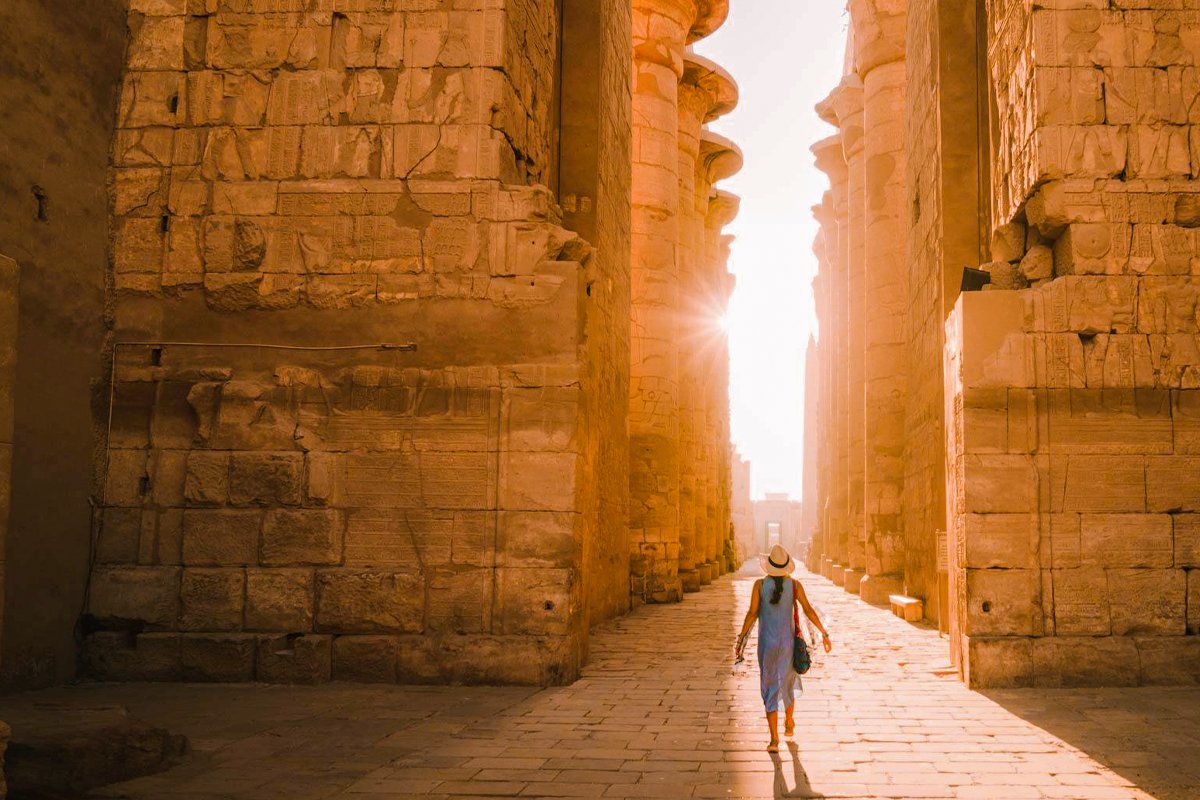
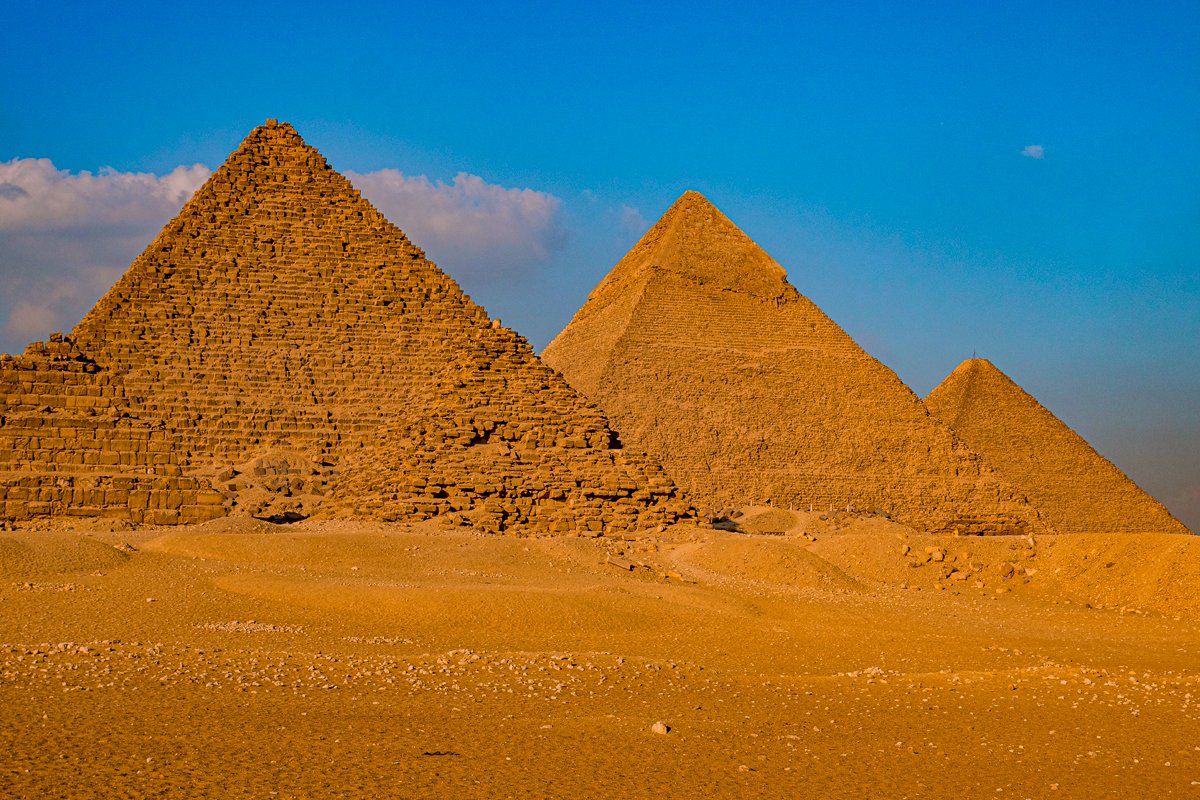
From the moment you step off the ferry that crosses the Nile from Luxor city to the West Bank, you feel the shift. Green fields give way to dry gravel plains, the noise of the city fades, and ahead rise the pale cliffs the ancient Egyptians knew as Ta-Set-Neferu, "the place of beauty." Here, rather than among the pyramids of Giza, the pharaohs of the New Kingdom built their final homes in the Valley of the Kings, a valley so remote that it survived nearly three thousand years before the outside world found it again.
A Brief History of the Valley of the Kings
The story of the Valley of the Kings begins in the Eighteenth Dynasty, around 1550 BC, when a new line of pharaohs reunified Egypt after centuries of division and foreign rule. The early New Kingdom rulers knew the fate of their predecessors. The great pyramids of the Old Kingdom, magnificent as they were, had been nothing more than enormous signposts pointing at the royal treasures inside, and tomb robbers had emptied most of them within a few generations. Thutmose I, or possibly his architect Ineni, is credited with the decision to abandon the pyramid for good and instead cut a secret tomb into the cliffs of a remote valley on the west bank of Thebes, the modern city of Luxor, a valley that would become the Valley of the Kings.
The location was chosen with care. The Valley of the Kings sits directly below el-Qurn, a natural pyramid-shaped peak the Egyptians associated with the goddess Meretseger, "she who loves silence." The west bank, where the sun set and where the dead journeyed toward the underworld, was already sacred ground. By placing the royal tombs in this hidden valley, the pharaohs hoped to protect their bodies, their treasures, and the spells that would carry them into eternity. The royal workmen lived in a dedicated village nearby, today known as Deir el-Medina, and a single elite force of guards watched over the whole burial ground.
For nearly five centuries, from roughly 1539 BC to 1075 BC, the pharaohs of the Eighteenth, Nineteenth, and Twentieth Dynasties were buried in the Valley of the Kings. More than sixty tombs and burial pits have now been discovered in the two branches of the valley, known as the East Valley and the West Valley. The last royal burial was that of Ramses XI, the final ruler of the Twentieth Dynasty, after which the necropolis fell into decline. Political turmoil, poverty, and the sheer difficulty of protecting a remote valley eventually overwhelmed even the most determined guards, and the Valley of the Kings became a target for the tomb robbers whose crime it had been built to defeat.
The modern history of the Valley of the Kings begins with the arrival of European explorers and archaeologists in the eighteenth and nineteenth centuries. Early visitors, including Giovanni Belzoni, cleared and documented several tombs, some of which had been looted long before. The site was systematically excavated and mapped, and its importance grew with each new discovery. Yet the valley still guarded its greatest secret, and it would take a patient English archaeologist to finally reveal it.
The Discovery of Tutankhamun and the Boy King's Tomb
The name Howard Carter is inseparable from the Valley of the Kings, and his name is inseparable from the single most famous archaeological discovery in history. Carter began working in Egypt as a young artist and epigrapher, and he first came to the Valley of the Kings to record the tombs with the archaeologist Gaston Maspero. Later, with the backing of the fifth Earl of Carnarvon, a wealthy lover of Egyptian antiquities, Carter began a methodical search for the tomb of a minor pharaoh named Tutankhamun, a boy king known mainly from a handful of inscribed objects.
Years of digging in the Valley of the Kings brought nothing, and Carnarvon grew impatient. In 1922, he agreed to fund one final season, and on November 4 of that year, Carter's workmen uncovered a stone step buried beneath the rubble of a later tomb. The following day the steps revealed a sealed door bearing royal cartouches. When Carter broke through the door, and later opened the inner chamber with Carnarvon looking on, he found a tomb that had been sealed for more than three thousand years, still almost entirely intact.
The contents staggered the world. More than five thousand objects, from golden shrines and the boy king's solid-gold death mask to chariots, beds, thrones, games, and jars of wine, filled the small chambers of KV62, as the tomb is numbered today. It was the first intact royal burial ever found in Egypt, and it remains the only substantially intact pharaoh's tomb ever discovered. The subsequent death of Lord Carnarvon from an infected mosquito bite fed a worldwide myth of the "curse of the pharaohs."
Today Tutankhamun's golden mask and treasures are among the great attractions of the Egyptian Museum in Cairo, with an expanding display at the Grand Egyptian Museum, and the king himself now rests in a climate-controlled case in his own tomb in the Valley of the Kings. Despite the fame of its contents, the tomb itself is small, scarcely more than a royal burial pit, a reminder that Tutankhamun died young and that his tomb was likely prepared in a hurry. Even so, a visit to KV62 is one of the most moving moments of any trip to Luxor.
Understanding the Royal Necropolis
Scholars divide the Valley of the Kings into two principal areas. The East Valley, the larger and more heavily used branch, contains the vast majority of the tombs open to visitors, including almost all of the most famous burials. The West Valley, smaller and harder to reach, holds a handful of tombs, most notably those of Amenhotep III and Ay, Tutankhamun's successor. The entire site is numbered KV, for "Kings' Valley," with each tomb assigned a number in order of discovery.
Because the tombs of the Valley of the Kings are numbered by discovery rather than by chronology, the numbering offers no clue to which pharaoh rests where. KV62, for example, is the tomb of Tutankhamun, while KV7 is the tomb of Ramses II and KV17 belongs to Seti I. This can confuse first-time visitors, who expect some logic in the sequence. The tombs also vary enormously in size, decoration, and state of preservation. Some, like the tomb of Seti I, are sprawling galleries of breathtaking painted reliefs; others, like the tomb of Tutankhamun, are cramped single chambers. A few tombs are open one year and closed the next, as conservation teams work to combat humidity, bat guano, and the wear and tear of mass tourism.
Conservation is a serious concern. The soft limestone of the Valley of the Kings is fragile, and the salts that migrate through the rock are aggravated by the moisture brought in by thousands of visitors breathing and sweating inside sealed chambers. The authorities rotate the tombs that are open to the public, close some for restoration, and impose strict rules about photography and crowding, which is why the tombs you see this year may differ from those you saw last year.
The tombs of the Valley of the Kings follow a recognizable plan that evolved over the centuries. The earliest royal tombs were simple, bent-axis corridors descending steeply into the rock. In the Ramesside period the design straightened out, creating long, straight, magnificently decorated corridors. Whatever the layout, the purpose was the same: to guide the pharaoh through the twelve hours of the night, through the dangers of the underworld, and into rebirth with the sun god Ra.
Tomb Layout, Symbols, and Decorations
Walking into a royal tomb in the Valley of the Kings is like walking into a stone book, and its language has not been spoken in ordinary conversation for more than two thousand years. The decorations are not art for art's sake; every scene is a spell, every hieroglyph a power-charged syllable, every figure a guardian or helper on the pharaoh's perilous journey. To read the tombs even a little is to see them transformed into something far richer.
The standard repertoire of decoration in the Valley of the Kings draws on several great religious texts. The Book of the Dead, assembled from older spells, guided the deceased through the judgement of the soul before Osiris. The Amduat, literally "that which is in the underworld," describes the sun god's journey through the twelve hours of the night, each filled with monsters, gods, and the damned. The Book of Gates adds a sequence of guarded gates through which the sun must pass. The Book of Caverns and the Litany of Ra appear in later tombs, and the ceiling of the burial chamber was often painted as a starry sky.
The journey is always the same in essence. The pharaoh dies, his body is mummified, and his ba, the part of his soul that could move freely, must reunite with his ka. Together they must navigate the underworld, avoid being devoured by Apophis the world-serpent, pass the judgement of Osiris, and emerge triumphant with the rising sun, reborn like Ra himself. Every scene supports that single narrative of death, judgement, and rebirth.
The images also served a very practical protective function. Tomb robbers were the enemy the valley was built to defeat, and the walls were decorated not only to guide the king but to curse, confuse, and frighten anyone who disturbed his rest. Snakes, demons, and the blazing eyes of gods watch from every surface.
The Best Tombs to Visit in the Valley of the Kings
With more than sixty tombs to choose from and only a handful open to the public at any time, planning which tombs to visit is part of the adventure. Most visitors spend two to three hours in the valley, and the standard entrance ticket normally covers three tombs of your choice, with famous tombs such as Seti I, Tutankhamun, and the tomb of Ramses V and VI requiring a supplementary ticket. Below are the tombs that deserve pride of place on your list.
Tomb of Ramses III (KV11)
The tomb of Ramses III, numbered KV11, is one of the largest and most popular tombs in the Valley of the Kings. Ramses III, the last great pharaoh of the New Kingdom, defeated the Sea Peoples in a desperate naval battle and was ultimately murdered in a harem conspiracy. His tomb follows the classic Ramesside plan, a long straight axis descending through four corridors and into pillared halls, decorated with some of the finest painting anywhere in the valley.
The highlight is the Litany of Ra in the entrance corridor, with its remarkable painted ceilings featuring images of the goddess Nut and rows of gilded figures. Deeper in, the side chambers show scenes from the Book of the Dead and a famous depiction of the two blind harpists. It is a large, dramatic tomb, and for many visitors it is the moment the valley first makes sense.
Tomb of Ramses V and Ramses VI (KV9)
The tomb of Ramses V and Ramses VI, numbered KV9 and known in ancient times as the Tomb of Memnon's Ankh, is arguably the most beautiful and certainly the most impressive ceiling in the Valley of the Kings. Ramses V died young and his tomb was unfinished, so his successor Ramses VI took over the tomb, extended it, and used it for his own burial, neatly erasing his predecessor from history. The tomb's builders also demolished the workmen's huts that sat over the entrance, a decision that, three thousand years later, would help conceal the tomb of Tutankhamun directly below.
Visitors enter through a massive doorway and descend a long, gently sloping corridor decorated with the Book of the Dead and the Amduat. The great treasure of KV9 is its ceiling in the burial chamber, which features a double astronomical image of the sky goddess Nut stretching across the whole vault, her body arched in a breathtaking composition painted on a deep blue-black background scattered with stars. The painted ceiling has survived in astonishing condition, and it remains one of the signature images of the Valley of the Kings, still capable of stopping visitors dead in their tracks.
Tomb of Merenptah (KV8)
The tomb of Merenptah, numbered KV8, is often quieter than its famous neighbors, which makes it a favorite of travelers who want to appreciate the valley without the crowds. Merenptah was the thirteenth son of Ramses II, who outlived his father and took the throne in his sixties, and he is the pharaoh who, according to the so-called Merenptah Stele, claimed to have fought a people called Israel. His tomb descends farther below the surface than any other tomb in the Valley of the Kings, following a grand axis of corridors and chambers deep into the hillside.
Its decorations, though badly damaged by floods in antiquity, still include beautiful sections of the Book of Gates and the Book of the Dead, and a granite outer sarcophagus still rests in the burial hall. Because KV8 is less famous than KV11 or KV9, visitor numbers are lower and the atmosphere more intimate. If you enjoy having an ancient monument almost to yourself, make room on your ticket for Merenptah.
Tomb of Tutankhamun (KV62)
The tomb of Tutankhamun, KV62, is the smallest royal tomb on your list and by far the most famous, and its story is woven through the whole history of the Valley of the Kings. What you should know before you visit is that the tomb itself is a humble, four-room affair, a cramped corridor leading to a square burial chamber and a couple of side rooms, decorated only in the antechamber and burial chamber, and painted hastily. The dazzling treasures that once filled it now live in the museum collections of Cairo, and the king himself rests in a climate-controlled case in the burial chamber, his famous gold mask kept under lock and key elsewhere.
Even so, KV62 is unmissable. To stand in the chamber where Carter first broke through a sealed doorway on November 26, 1922, and to think of the five thousand objects that once filled this small space, is to feel history close around you. The supplementary ticket is well worth it, and the tomb is a spiritual centerpiece of any visit to the West Bank.
Tomb of Seti I (KV17)
The tomb of Seti I, numbered KV17, is widely considered the finest tomb in the entire Valley of the Kings, and among archaeologists it is the benchmark against which all others are judged. Seti I, father of Ramses II and himself one of Egypt's great warrior kings, prepared a tomb of enormous length and complexity, descending more than a hundred meters through eleven chambers and corridors, every surface covered in exquisitely carved and painted reliefs. The carving is exceptional, and in places the colors are so well preserved that the tomb feels freshly painted.
KV17 also contains the finest painted reliefs of the Book of the Dead anywhere in the valley. Because of its fragility, the tomb is frequently closed for conservation, and visits require a premium supplementary ticket. When it is open, it is the single most glorious experience the Valley of the Kings offers, and any tour arranged around its availability is a tour well designed.
Tomb of Ramses IX (KV6)
The tomb of Ramses IX, numbered KV6, is one of the later royal burials in the Valley of the Kings, created at the end of the Twentieth Dynasty when Egypt was declining and the valley was already being plundered. Its entrance corridor is wide, straight, and superbly decorated, and its burial chamber contains one of the best-preserved astronomical ceilings in the valley, a great vaulted image of the goddess Nut.
Because KV6 sits close to the entrance, it is an easy first stop, and because it receives fewer visitors than the superstar tombs, it offers a relaxed atmosphere in which to study the scenes in detail. For the visitor who wants to round out their understanding of the Ramesside era without the queues, the tomb of Ramses IX is a quietly excellent choice.
Tickets, Hours, and Practical Planning
Planning your visit properly makes the difference between a rushed, confusing morning and a rich, unhurried one. The Valley of the Kings opens early and closes early, because the desert heat and the fragile tombs argue strongly against midday visits. Buy tickets in advance where possible, carry cash, and get to the gates as close to opening time as you can. The morning light is the best for photography, the temperatures are at their kindest, and the tour groups arrive a couple of hours later.
Standard tickets cover the entrance to the Valley of the Kings plus a choice of three tombs, excluding the tombs that require supplementary tickets. The supplementary tombs are the famous ones, Seti I and Tutankhamun, and occasionally others, and they are priced individually. Prices change over time and are set in Egyptian pounds, but they are typically modest, and the system is designed to manage visitor numbers as much as to raise revenue. You buy your main ticket and your supplementary tickets at the same gate desk, so arrive ready to make your choices rather than deciding on the spot while queues form behind you.
The rules inside the Valley of the Kings are strict and sensible. Photography is not allowed inside the tombs, and the guards enforce the ban firmly; flash photography in particular can damage the ancient pigments, so the ban is part of the conservation effort. You will be asked to remove your shoes for some tombs, to keep out dust and moisture. Do not touch the walls, do not lean on the columns, and do not wander off the marked paths. Large bags, drones, and tripods are not permitted, and you will pass through a security screening at the gate.
There is no shade in the valley, no water fountain, and only basic facilities at the visitor center. Bring a hat, sunglasses, sunscreen, and a bottle of water, and carry more water than you think you need. Comfortable walking shoes are essential, as you will climb ramps, descend stairs, and walk across gravel between tombs. A small tourist tram shuttles between the parking area and the entrance, saving you a walk across the hot plain, and a guide's knowledge of which tombs are open on a given day can save you time and heatstroke. The table below summarizes the typical arrangement of tickets at the time of writing.
| Ticket | What It Covers | Typical Cost | Notes |
|---|---|---|---|
| Standard valley ticket | Site entrance plus three tombs of your choice | Moderate; varies by season | Excludes supplementary tombs; free for children under a certain age |
| Tutankhamun tomb supplement | Entry to KV62 only | Moderate extra fee | Purchase at the gate with your main ticket; essential visit |
| Seti I tomb supplement | Entry to KV17 only | Premium extra fee | Often closed for conservation; check before travelling |
| Ramses V and VI tomb supplement | Entry to KV9 only | Moderate extra fee | Famous for its astronomical ceiling |
| Photography permit | Camera pass for the site | Small fee | Does not allow photography inside tombs |
Opening hours are seasonal, roughly from six or seven in the morning until late afternoon in summer and earlier in winter, and the ticket office stops selling tickets an hour or more before closing. The valley is closed on some public holidays and may close temporarily during extreme weather. The single best planning decision is to visit on a weekday, at first light, with a full morning rather than a rushed ninety minutes.
Beyond the Tombs: The Luxor West Bank
The Valley of the Kings is only one chapter of the West Bank story, and no visit is complete without seeing the monuments that surround it. The West Bank of Thebes was the great city of the dead, a landscape of mortuary temples and the villages of the people who built and guarded the tombs, and its attractions combine naturally into a single day.
The Mortuary Temple of Hatshepsut at Deir el-Bahri is the most dramatic building on the West Bank and one of the most distinctive monuments in Egypt. Hatshepsut, the female pharaoh who ruled as a king, ordered the temple built against the sheer cliffs of the western escarpment, rising in three great terraces connected by ramps, its colonnades blazing white against the rock. It is famous for its reliefs of the queen's divine birth and the expedition to the land of Punt, and its setting beneath a vast amphitheater of cliff is unforgettable.
The Colossi of Memnon, two colossal seated statues of Amenhotep III, greet every traveler who approaches the West Bank from the ferry. These twin giants, originally guarding the entrance to what was the largest mortuary temple in Egypt, are all that survive above ground of that once enormous complex. In antiquity one of the statues was damaged and began to emit a musical hum at dawn, which the ancient world attributed to the mother of Memnon weeping for her son; the emperor Septimius Severus later had it repaired, and the sound was silenced forever.
The village of Deir el-Medina is the ghost settlement of the workmen who built the royal tombs, and it is one of the most revealing archaeological sites in Egypt. Here lived the artists, scribes, and stonemasons of the Valley of the Kings, and here they left behind their own tombs, decorated with the same skill they devoted to the pharaohs, along with thousands of documents recording the everyday dramas of their lives. Their village, cemetery, and the temple of their goddess Meretseger together offer a human face to the royal necropolis.
Other West Bank highlights reward extra time. The Ramesseum, the mortuary temple of Ramses II, contains the fallen colossus of the king and the famous poem of the Battle of Kadesh. The Medinet Habu complex, the vast mortuary temple of Ramses III, is one of the most completely preserved temples in Egypt and, compared with its neighbors, surprisingly uncrowded. The Tombs of the Nobles, cut into the hillside opposite the valley, hold vibrant paintings of daily life. A West Bank itinerary that rushes from the valley straight back to the ferry misses the richest part of the story, so give the whole bank a full day, or even two.
Hot-Air Balloon Flights over the Valley of the Kings
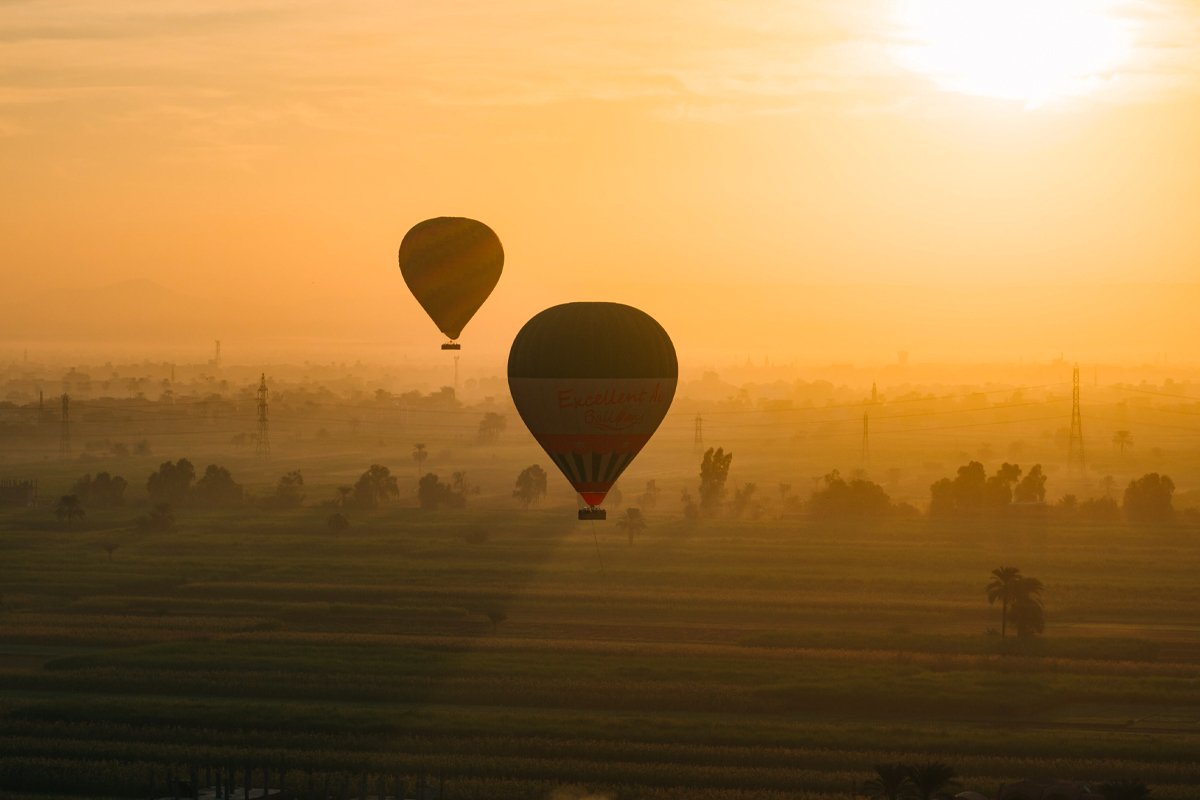
If there is one experience above all others that defines a trip to Luxor, it is the dawn hot-air balloon flight over the West Bank. Every morning, weather permitting, dozens of balloons rise from the fields at the foot of the cliffs, catching the first light as the sun comes up over the Nile, and drift slowly across the desert above the Valley of the Kings and the mortuary temples. From the air, the geography of the city of the dead makes complete sense: the green strip of cultivation, the pale desert, the cliffs, and the hidden valley resolve into a single, legible landscape.
Flights typically begin before dawn, with the balloon company collecting you from your hotel in the dark and driving you to the launch site. The inflation of the great envelope is an event in itself, with the burners roaring and the pilot calling instructions to the crew. Once aloft, the flight lasts roughly thirty to forty-five minutes, drifting with the wind in a direction the pilot cannot fully control, which is precisely the charm of it. You float past the Valley of the Kings, over Hatshepsut's temple and the Colossi of Memnon, and out across the cultivated plain, the view changing constantly as the sun climbs.
Safety is the first consideration in choosing a balloon company, and it is worth paying for a reputable operator with proper licensing, trained pilots, and up-to-date equipment. Egypt has modern aviation regulations for commercial ballooning, and the best companies have excellent records, but research your operator, check reviews, and confirm that your pilot is certified. Dress warmly in winter, when the desert mornings are genuinely cold, and expect the basket to be closely packed; most flights end with a gentle landing, a glass of celebratory tea, and a certificate to mark the occasion.
Flights operate year-round but are weather-dependent, so book them for the earliest morning of your stay, leaving room to reschedule if the wind is wrong. The view over the Valley of the Kings at sunrise, with the tombs and temples glowing rose and gold below you, is one of the great memories of any Egypt holiday.
Frequently Asked Questions About the Valley of the Kings
This last section answers the questions travelers ask most often as they plan their visit to the Valley of the Kings, so you can arrive informed and confident rather than curious and uncertain.
| Question | Answer |
|---|---|
| Where exactly is the Valley of the Kings? | It lies on the West Bank of the Nile at Luxor, a short drive from the ferry landing and roughly two kilometers from Deir el-Bahri, on the desert edge of the cultivated plain at the foot of the Theban cliffs. |
| How many tombs are in the valley? | More than sixty tombs and burial pits have been discovered in the East and West Valleys combined. A rotating selection of around ten to eighteen tombs is open to visitors at any given time. |
| How long should I allow for the visit? | Plan for two to three hours, longer if you want supplementary tombs and the visitor center. The valley rewards a slow, early start. |
| Can I take photos inside the tombs? | No. Photography is banned inside the tombs to protect the ancient pigments; the site exterior may be photographed with a camera pass bought at the gate. |
| Is the Tutankhamun tomb worth the extra ticket? | Yes, for almost every visitor. The tomb is small, but its historical significance and the story of its discovery make it the emotional centerpiece of the valley. |
| Is the Valley of the Kings wheelchair accessible? | Partially. The site has flat paths between tombs and a visitor tram from the car park, but tomb interiors involve steps and ramps, so access to individual tombs is limited for those with mobility problems. |
| What should I bring? | Water, a hat, sunglasses, sunscreen, comfortable shoes, and cash for tickets. Dress modestly for the cultural setting and remember there is little shade. |
| Are children allowed in the valley? | Yes, children are welcome, and entry is generally free below a certain age. Keep visits short in the heat, bring water, and consider the morning hours. |
| What is the best time of year to visit? | The winter months from October to April are the most comfortable. In summer, plan strictly for first light and finish before the heat peaks. |
| How do I get from Luxor city to the valley? | Cross the Nile by ferry or bridge and drive through the West Bank villages. Most visitors go with a tour, taxi, or private driver arranged by their hotel. |
A good rule of thumb for combining all the pieces is: dawn balloon flight, early visit to the Valley of the Kings, then Hatshepsut's temple and Deir el-Medina before the afternoon heat, saving Medinet Habu and the Colossi of Memnon for late afternoon light. Whichever order you choose, give the West Bank the time it deserves.
| Attraction | Distance from the Valley | Suggested Time | Why It Matters |
|---|---|---|---|
| Hatshepsut Temple at Deir el-Bahri | About 10 minutes by road | 1 to 1.5 hours | The most spectacular mortuary temple on the West Bank, built into the cliffs |
| Colossi of Memnon | About 15 minutes by road | 15 to 20 minutes | Two colossal statues of Amenhotep III, gateway to the ancient city of the dead |
| Deir el-Medina | About 15 minutes by road | 1 hour | The village of the tomb builders, with their own decorated tombs |
| Ramesseum | About 15 minutes by road | 45 minutes | Mortuary temple of Ramses II, home of the fallen colossus |
| Medinet Habu | About 20 minutes by road | 1 to 1.5 hours | The vast and well-preserved mortuary temple of Ramses III |
Making the Most of Your Valley of the Kings Visit
A visit to the Valley of the Kings rewards those who come prepared, and a handful of small choices will transform your morning from good to unforgettable. Go early, go midweek, and go with a plan. Reserve your energy for the tombs that matter most to you, and balance the famous tombs with a quieter one where you can linger. Hire a guide whose knowledge can bring the painted walls to life, or read a little about the Amduat and the Book of the Dead before you arrive, because the tombs speak to those who can hear their language.
Respect the site. The Valley of the Kings is not a museum of relics but a sacred landscape, and the millions of visitors who walk it each year are guests in the presence of three thousand years of royal death ritual. Follow the rules, keep your voice low inside the tombs, and spare a thought for the workmen who spent their lives cutting and painting these corridors.
For those who want to experience the valley properly, a guided day on the West Bank makes an enormous difference. A knowledgeable local guide can navigate the rotating list of open tombs, book your supplementary tickets, order your route to avoid the crowds, and bring the scenes on the walls to life. At Maddy Tours Egypt, based in Cairo and trusted by travelers from around the world, we have spent years designing Luxor West Bank experiences that combine the Valley of the Kings, Hatshepsut's temple, Deir el-Medina, and the Colossi of Memnon into a single, seamless day, with private transport, expert guides, and balloon flights arranged on request. However you choose to explore, the Valley of the Kings is waiting for you, silent, golden, and eternal, and the only mistake you can make is not going.