5 Mistakes to Avoid When Booking Your Egypt Vacation
Planning a trip to the land of the pharaohs is one of the most exciting decisions you will ever make, but it is also one where small oversights can turn a dream holiday into a frustrating one. The biggest mistakes to avoid when booking Egypt vacation packages are rarely about the pyramids themselves; they are almost always about the details you never checked before paying your deposit. From unlicensed guides waiting at airport arrivals to cancellation policies that swallow your money whole, the gap between a perfect Nile cruise and a stressful one is often just a few smart questions asked at the right time. This guide exists to save you from those pitfalls. Whether this is your first trip to Cairo, Luxor, and Aswan or your fifth, working through these points before you book will protect your budget, your time, and your peace of mind. When you are ready to turn plans into bookings, a licensed operator like Maddy Tours Egypt can handle the rest.
The Biggest Mistakes to Avoid When Booking Egypt Vacation Tours: Unlicensed Guides
The most serious mistake to avoid when booking Egypt vacation tours is hiring guides who are not licensed by the Egyptian Ministry of Tourism and Antiquities. Every legitimate guide must hold a government-issued license earned through recognized study and examinations in Egyptology, history, and language. Unlicensed guides operate outside this system entirely, with no verified training, no insurance covering you, and no accountability if something goes wrong. When you book with a licensed tour operator, your guides are screened, licensed, and answerable to the company. That paperwork is not bureaucracy; it is your protection.
Unlicensed guides usually appear when a traveler arrives without a guide and accepts the first friendly person near a temple entrance or hotel lobby. Some are harmless, but many are hustlers whose real job is steering you toward shops and boat operators who pay them referral fees. Every hour you spend being steered toward a cousin's shop is an hour you did not spend at the monuments you came to see. Worse, if an accident or theft occurs while you are in the care of an unlicensed operator, your travel insurance may refuse the claim because you were not using a licensed provider.
The fix is simple. Book with a licensed operator and verify that your guide holds a valid badge when you meet them; a professional will gladly show it. Look for guides who speak your language, ask what you want to focus on, and never push shopping stops unless you request them. This single habit eliminates the largest source of stress and wasted money on any Egypt trip.
Underestimating Distances: Mistakes to Avoid When Booking Egypt Vacation Routes
On a map, Egypt appears small, its famous sites crowded along a thin green ribbon of the Nile. In reality, it is a vast country, and the distances between headline attractions are far larger than first-time visitors imagine. Cairo to Aswan by road is roughly 850 kilometers. Aswan to Abu Simbel is another 280 kilometers south. The Red Sea resorts at Hurghada are a four-to-five-hour drive from Luxor across the Eastern Desert. Underestimate these distances and you either pack impossible itineraries or spend the holiday staring out of a window instead of at monuments.
Egypt travel tips on distance all begin with the same advice: measure your trip in travel time, not kilometers. A domestic flight from Cairo to Luxor takes about an hour in the air, but airport arrival, security, and transfers at both ends usually turn it into a half-day event. A night train from Cairo to Luxor takes roughly ten to twelve hours. A Nile cruise between Luxor and Aswan takes three to five days precisely because the river is the journey. Each is a valid choice, but you must choose deliberately based on how much time you actually have.
The consequence of underestimating distance is booking a seven-day trip that expects Cairo, Luxor, Aswan, Abu Simbel, and the Red Sea when three weeks would barely cover it all. The solution is prioritization: decide which three or four experiences matter most, build the itinerary around them, and allow one full travel day for each major transfer. A well-planned ten-day vacation with a licensed operator might include three days in Cairo, a short flight south, four days on a Nile cruise, and a flight north. Add Hurghada or Alexandria on top and you create a checklist holiday where you are always rushing to the next departure.
Visa Oversights Are Easy Mistakes to Avoid When Booking Egypt Vacation Entry Requirements
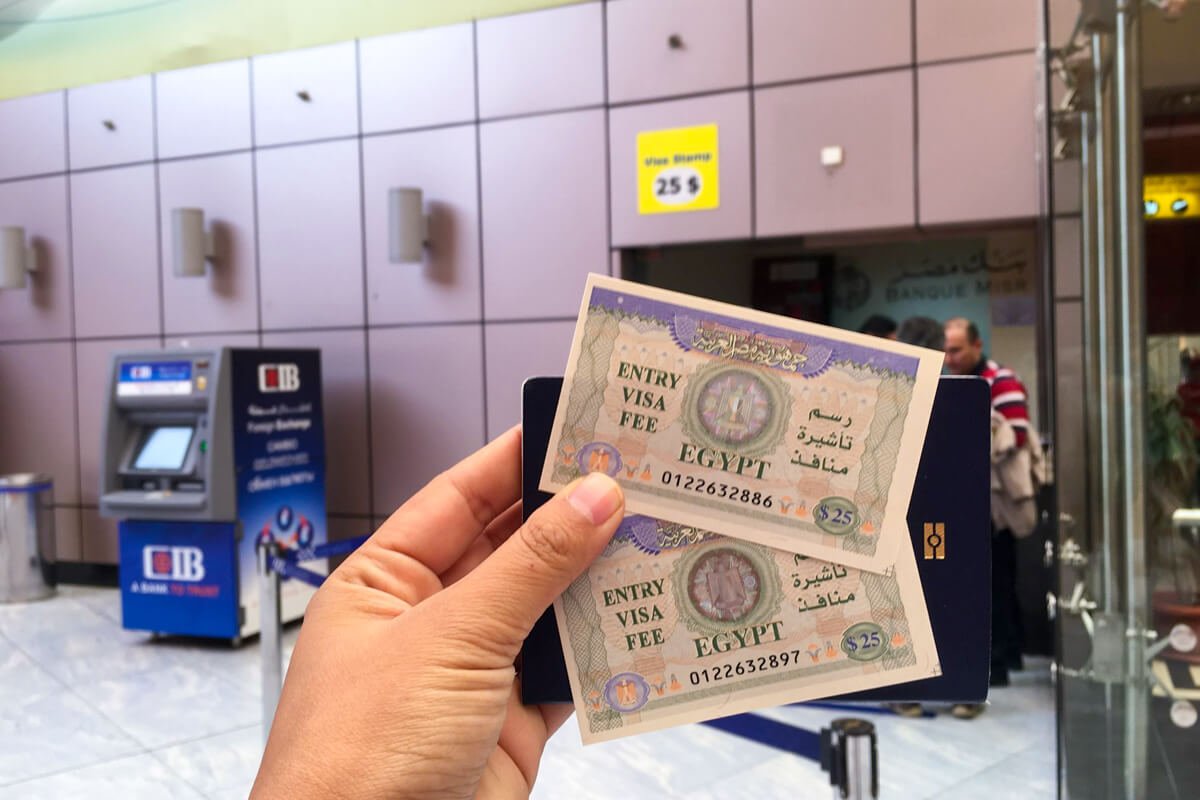
Nothing is more anticlimactic than landing at Cairo International Airport and discovering your paperwork is wrong. Visa mistakes are among the most common mistakes to avoid when booking Egypt vacation travel, and they are also the easiest to prevent. For most nationalities, a single-entry tourist visa is required, but how you obtain it depends on your passport. Citizens of many countries, including the United States, Canada, the United Kingdom, Australia, and most of Europe, can buy a single-entry visa on arrival at Egyptian airports for roughly 25 US dollars, payable in cash. Citizens of some countries must apply through an embassy first, and a few nationalities enjoy visa-free entry. Never assume; always check the current rules for your passport before booking flights.
The official e-Visa portal lets eligible travelers apply online in advance, avoiding the arrival queue and helping if you plan to extend your stay. Whichever route you choose, watch three details: your passport must be valid at least six months beyond departure, single-entry and multiple-entry visas cost different amounts, and the arrival counters do not always accept cards, so carry cash.
| Nationality | Visa Requirement | How to Obtain It |
|---|---|---|
| United States | Single-entry tourist visa required | On arrival at Egyptian airports, or via e-Visa before travel |
| United Kingdom | Single-entry tourist visa required | On arrival, or via the official e-Visa portal |
| Canada | Single-entry tourist visa required | On arrival, or via the official e-Visa portal |
| Australia | Single-entry tourist visa required | On arrival, or via the official e-Visa portal |
| European Union (Schengen) | Single-entry visa required for most citizens | On arrival, or via the official e-Visa portal |
| Gulf Cooperation Council citizens | Visa-free entry for short stays | No visa required on arrival |
The most reliable Egypt visa advice is to arrange it through your licensed tour operator, who processes arrivals weekly and knows exactly what immigration officers require. Confirm whether the visa fee is included in your package or payable on arrival, ask before you book, and keep photocopies of your passport and visa separate from the originals.
Cancellation-Policy Traps: Mistakes to Avoid When Booking Egypt Vacation Packages
Cancellation policies are the fine print where travel dreams go to die. Every operator and hotel in Egypt has one, but they are far from identical. Some allow free cancellation up to forty-eight hours before arrival, while others keep one hundred percent of your payment if you cancel within thirty days of travel. The difference can be thousands of dollars, and travelers usually discover it only when they need to cancel, which is exactly the wrong moment to learn that your terms are brutal. Read the policy before you hand over a single dollar, and get it in writing.
Beyond the headline window, watch for three subtler traps: a large non-refundable deposit that takes your money before a generous-looking policy even applies, amendment fees that make changing dates nearly as costly as cancelling, and force majeure clauses that let a company keep your payment if any disruption interrupts your trip regardless of fault.
Protect yourself by asking three questions before booking any component. What happens if I cancel thirty, fourteen, and seven days before arrival? What happens if my flight is delayed or cancelled? What happens if a family member falls ill and the trip is postponed? A reputable licensed operator will answer clearly and in writing. If a company cannot produce a written policy, or the policy seems designed to take your money in every scenario, walk away and book elsewhere. Maddy Tours Egypt publishes transparent policies and explains every clause in plain language before you commit.
Rushed Itineraries: The Most Common Planning Mistake
The classic first-timer error is packing nine days of sightseeing into a six-day trip. Travelers arrive with a list of every tomb, temple, and pyramid they have read about and try to see it all at double speed. The result is a blur of heat and crowds in which the pyramids and the Valley of the Kings merge into one overheated memory. Egypt rewards a slower rhythm; the monuments have stood for thousands of years and will not leave before you do. The strongest Egypt travel tips from professional planners all agree: quality of encounter beats quantity of sites.
How do you build an itinerary that does not collapse? Start with a spine: Cairo to Luxor to Aswan, moving south along the Nile with a cruise serving as both transport and accommodation. Allocate two full days to Cairo, because Giza, the Grand Egyptian Museum, Old Cairo, and Khan el-Khalili each deserve unhurried time. Allocate two to three days for Luxor, including the Valley of the Kings, Karnak, and Luxor Temple. Allocate two days for Aswan and Abu Simbel, and remember that Abu Simbel deserves its own early-morning excursion. That skeleton fills eight or nine days before you add a single Red Sea day.
Resist adding destinations simply because they are famous; with only seven days, dropping the Red Sea is wiser than adding a crushing desert drive. Build a rest hour into every afternoon, remember that each city transfer costs half a day of sightseeing, and leave one day unplanned as a buffer for delays. A relaxed itinerary visited fully beats an ambitious one visited at a sprint.
| Mistake | Consequence | How to Avoid It |
|---|---|---|
| Unlicensed guides | No training, no insurance, forced shopping stops | Book with a licensed operator and check the guide's badge |
| Underestimating distances | Crushing transfers and wasted holiday time | Plan in travel time and prioritize three or four regions |
| Visa mistakes | Delay, refused entry, or extra cost at arrival | Check your passport's rules and arrange the visa in advance |
| Ignoring cancellation policies | Loss of deposit or full payment | Get the written policy and ask about amendments and force majeure |
| Rushed itineraries | Exhaustion and a blur of monuments | Cut something, add rest time, and keep a buffer day |
Pricing Traps and Hidden Costs
When you compare prices for Egypt vacations, the numbers on screen are rarely the whole story. Pricing traps hide in plain sight: entrance tickets excluded, domestic flights priced as add-ons, gratuities not included, drinks billed separately on the cruise, and optional excursions that turn out to be the very sites you assumed were included. The mistake to avoid when booking Egypt vacation deals is judging a package by its headline price alone. A package that looks more expensive may be cheaper once you add what the bargain operator left out. Your Egypt travel tips on pricing should focus on one question: what is actually included?
Entrance tickets are the largest hidden cost. Fees at major sites add up quickly, and a budget operator may quote a price that excludes every gate, leaving you to hand over cash at each one. A licensed operator confirms which tickets are included and can purchase them in advance.
Smaller traps are no less annoying: resort fees charged locally, baggage fees on internal flights, and photography permits separate from entrance tickets. The fix is an itemized breakdown before you book, listing fees, meals, transfers, flights, and gratuities line by line; if a company will not itemize, that is a red flag. Ask whether tips are included, whether water is provided on the bus, and whether the cruise is full-board or half-board.
Tipping Confusion and How to Solve It
Tipping in Egypt confuses nearly every first-time visitor, and it is a mistake to avoid when booking Egypt vacation trips because it affects both your budget and your relationships with the people who serve you. Egypt is a tipping culture; gratuities are a real part of how service workers are paid, and guides, drivers, crew, and even bathroom attendants expect them. The problem is confusion about who to tip, how much, and when, which leads travelers to overtip out of anxiety or undertip out of ignorance.
As a rough guide, set aside about ten percent of the trip budget for tips. Expect to tip a private guide around ten to fifteen dollars per day and a driver five to ten dollars per day. At restaurants, a service charge is often already added, so check before adding more. Carry small Egyptian pound notes for porters, restroom attendants, and minor services; US dollars work for larger tips.
The smart approach is to handle tipping through your tour operator. A licensed operator such as Maddy Tours Egypt can provide a written tipping guide tailored to your itinerary, telling you exactly who receives what and when. Some operators even offer a prepaid gratuity option where you add a tip fund and the operator distributes it for you, removing guesswork. Avoid handing out all your tips on day one; spread them across the trip so service stays enthusiastic, and always tip quietly rather than ostentatiously.
Choosing the Wrong Nile Cruise Cabin
The Nile cruise between Luxor and Aswan is the centerpiece of many Egypt vacations, and a common error is choosing a cabin by price alone without understanding what you are buying. The mistake to avoid when booking Egypt vacation cruises is assuming all ships are alike. Vessels vary enormously in age, size, cabin quality, and dining standards, and the same itinerary can feel luxurious on one ship and dated on another. When you book through a licensed operator, ask for the specific ship name and year of refurbishment, not just a vague five-star rating.
Several cabin details matter more than travelers expect. A lower-deck cabin may have a porthole at waterline level rather than a full window, while an upper-deck balcony cabin costs more but delivers sunrise views over the Nile. If you are prone to motion sickness, request a mid-ship cabin, and if you value quiet, avoid cabins above the engine room or below the lounge. Families should check for connecting cabins, and solo travelers should ask about single supplements.
The ship deserves the same scrutiny. Check for a shaded sun deck, a real pool, and dining that matches your needs, and ask whether meals are buffet or à la carte and whether water is included. Finally, remember that the value of a cruise lies in its included shore excursions: confirm which Luxor and Aswan sites are covered and whether Abu Simbel is included or an add-on.
Ignoring the Egyptian Heat
Egypt is hot. That statement sounds obvious, yet heat is one of the most underestimated factors in trip planning, and ignoring it is a classic mistake to avoid when booking Egypt vacation activities. In June, July, and August, daytime temperatures in Luxor and Aswan regularly exceed forty degrees Celsius, and desert sun is unforgiving in ways coastal tourists rarely expect. Visitors who plan full days outdoors without accounting for the heat end up dehydrated and too tired to enjoy the monuments they came to see. Smart travelers treat the heat as a planning constraint, not a weather forecast.
How to book a trip to Egypt that survives the heat starts with the calendar. The ideal months for the classic Nile itinerary are October through April, when days are pleasant and evenings cool. December and January are peak season with larger crowds and higher prices, but the comfort is unmatched. If you must travel in summer, structure your days around the heat: sightsee at first light when sites are cool and quiet, retreat to the pool between roughly one and four in the afternoon, and resume outdoors in the late afternoon. This pattern is not a compromise; it is how experienced Egypt travelers have always done it.
Practical Egypt travel tips for staying healthy in the heat are simple: drink water constantly, wear a wide-brimmed hat, sunglasses, and loose, light-colored clothing, and reapply high-SPF sunscreen through the day. Carry electrolyte sachets if you are prone to dehydration, and time serious sightseeing to avoid the worst of the midday sun. The monuments have survived millennia; they will survive being visited at seven in the morning.
Picking the Wrong Hotel Location
The wrong hotel location can quietly sabotage an entire Egypt vacation, and it is a mistake to avoid when booking Egypt vacation accommodation. On a map two hotels look equally close to the attractions; on the ground one may be a five-minute walk from the Nile Corniche while the other sits in a maze of traffic that swallows forty-five minutes of every outing. Location decides time in transit, evening life, and how easy it is to return for an afternoon rest, so choosing purely on stars or price is a common planning error.
In Cairo, Giza suits travelers focused on the pyramids who want a pyramid view, but it is a long drive from the center. Downtown and Zamalek are convenient for the Grand Egyptian Museum, Old Cairo, and Khan el-Khalili, with far more evening life. In Luxor, the East Bank puts you near the temples, restaurants, and the Nile, while West Bank hotels sit close to the Valley of the Kings and feel quieter. In Aswan, waterfront hotels on the Corniche offer the best sunset views.
Before booking any hotel, check four things with your operator. How far is it from your sites in actual driving time? Is it within walking distance of restaurants and a river promenade? Does it have a pool, which becomes essential in summer? Is breakfast included in the price? A licensed operator with local knowledge matches your itinerary to the right neighborhood so the hotel becomes a strategic asset rather than a daily frustration. The perfect hotel is not the most luxurious on the list; it is the one that makes every other part of your day flow more smoothly.
Recognizing and Avoiding Tourist Scams
No honest guide to Egypt would pretend scams do not exist, but neither should anyone exaggerate them. Egypt is a safe, welcoming country where the overwhelming majority of people are kind and hospitable, yet tourist zones attract a minority who treat visitors as opportunities. Most Egyptian scams are low-stakes annoyances rather than dangers: a taxi driver who refuses the meter, a merchant who quotes five times a fair price, a self-appointed guide who demands payment after showing you a temple, or a vendor who tosses a scarf into your hands and insists you buy it once you have touched it.
The defense is preparation and calm. Agree on taxi fares before entering the vehicle, or use an app. In any bazaar, haggling is expected; start at roughly a third to a half of the first price quoted. Politely decline unsolicited help at temple entrances and boat ramps, never follow a stranger to a shop or rooftop without a clear price agreement, and never exchange money with individuals offering better rates than the banks. A licensed guide will steer you away from these situations automatically.
Scams also exist in the booking process, so the most important safety rule concerns where you spend your money. A mistake to avoid when booking Egypt vacation packages online is paying a stranger on social media with no physical office, no license, and no verifiable reviews. Look for an Egyptian tourism license, a verifiable address, a working phone number, and independent reviews. Use a credit card rather than wire transfer or cryptocurrency, because cards offer chargeback protection, and confirm the itinerary in writing before paying. Be suspicious of any deal dramatically cheaper than everyone else's. Genuine operators like Maddy Tours Egypt are happy to prove themselves with licenses, references, and transparent documents.
Money Matters: Currency, Cards, and Cash
Understanding Egyptian money in advance saves you from a whole category of small problems, and money mistakes are a quiet mistake to avoid when booking Egypt vacation travel. The official currency is the Egyptian pound, abbreviated EGP or LE, and its value fluctuates, so check the exchange rate shortly before you travel. While US dollars and euros are widely accepted at tourist hotels, cruises, and major sights, everyday transactions in markets, cafés, and taxis require local pounds. Bring some cash in US dollars, euros, or pounds sterling for the visa and emergencies, then exchange the rest in Egypt, where rates are generally better.
Exchange at banks, licensed exchange offices, or hotel reception, and use ATMs, which are common in Cairo, Luxor, and Aswan but less so in remote areas. Request a mix of denominations, because small notes are essential for tipping. Cards work at most hotels and larger restaurants, but many merchants only take cash, so notify your bank, carry a backup card, and keep emergency cash in a money belt or hotel safe.
One money lesson deserves emphasis: be precise about what your package includes versus what you will pay out of pocket. Confirm whether entrance fees, meals, water on the bus, domestic flights, and tips are inside or outside your price, and build a realistic daily cash budget. A useful rule of thumb is to set aside one hundred to one hundred and fifty dollars per person per week for incidentals. Track spending as you go, and ask your operator for a written list of suggested cash amounts so your wallet, like your itinerary, is planned rather than improvised.
Designing a Realistic Itinerary, Step by Step
If you have read the sections above, you know the biggest planning risk: trying to do too much. Professional planners start with honesty about time. Write down how many nights you have, subtract one for arrival and one for departure, and subtract another for every long transfer between regions. What remains is your true sightseeing time, and every itinerary should be built inside that number.
Step one is choosing your spine. For a first trip of eight to twelve days, the classic Cairo to Luxor to Aswan route is the best introduction to Egypt, pairing the pyramids of Giza with the temples and tombs of Upper Egypt and a Nile cruise that ties it together. Step two is allocating days. A sample ten-day plan might look like this: arrive in Cairo and settle in, two full days exploring Giza, Saqqara, the Grand Egyptian Museum, and Old Cairo, an early flight or night train to Luxor, three days of Valley of the Kings, Karnak, and Luxor Temple, a four-night cruise south to Aswan with stops at Edfu and Kom Ombo, two days in Aswan including Abu Simbel, and a final flight north before departure. That skeleton alone fills ten days.
Step three is understanding that this plan is a template, not a prison. If you are returning to Egypt, swap Luxor for Alexandria or the cruise for the Red Sea. If you love history, add Abydos and Dendera; if you love swimming, extend the Red Sea. Step four is a final check against your energy levels. Count the early morning starts, and if more than half your days begin before six, cut something. Count the long drives, and if any day holds more than one marathon transfer, redistribute. The itinerary that works is the one you can actually walk, in Egyptian heat, with a family, and still love by day nine. That is the only itinerary worth booking.
Booking Checklist and FAQ
Before you click confirm or sign the booking contract, run through this checklist. It condenses every piece of advice in this guide and catches the small oversights that create big problems. Checking these boxes takes ten minutes and saves you from the mistakes to avoid when booking Egypt vacation packages.
- Confirmed that your operator holds a valid Egyptian tourism license and has a verifiable physical address.
- Verified that your guide and driver are licensed and assigned by the operator, not unknown subcontractors.
- Read the full cancellation policy in writing, including deposits, amendment fees, and force majeure clauses.
- Confirmed whether entrance tickets, flights, meals, water, and gratuities are included in the quoted price.
- Arranged your Egypt visa for your nationality and confirmed whether the fee is included.
- Checked that your passport is valid at least six months beyond departure from Egypt.
- Reviewed the exact ship name, cabin category, and deck location for your Nile cruise.
- Verified hotel locations against your itinerary in actual driving time, not map distance.
- Noted the exchange rate, packed small pound notes, and told your bank you are traveling.
- Budgeted separately for tipping, with roughly ten percent of trip cost set aside.
- Planned sightseeing around the heat with early starts and shaded afternoons.
- Left one buffer day unplanned for delays or simply revisiting a favorite spot.
- Stored digital and paper copies of your passport, visa, insurance, and bookings separately.
- Paid with a credit card for chargeback protection, never a wire transfer to an unknown account.
| Question | Answer |
|---|---|
| How far ahead should I book my Egypt vacation? | Four to six months ahead for peak season, December through April, to secure your preferred ship, cabin, and hotels. |
| Should I book a tour or travel independently? | For first-time visitors, a licensed tour operator saves time, handles visas and tickets, and prevents the mistakes listed here. |
| Do I need a visa for Egypt? | Most nationalities need a single-entry tourist visa, available on arrival or through the e-Visa portal; check your passport's rules. |
| How many days do I need for Egypt? | Eight to ten days covers Cairo, Luxor, and Aswan comfortably; two to three weeks allows a deeper trip including the Red Sea. |
| When is the best time to visit Egypt? | October through April for comfortable temperatures; book ahead for the December and January peak. |
| Are Nile cruises worth it? | Yes for most travelers; the cruise combines transport, accommodation, dining, and shore excursions between Luxor and Aswan. |
| How much should I budget for tipping? | About ten percent of trip cost, distributed daily to guides, drivers, and crew according to a written guide. |
| Is Egypt safe for tourists? | Yes; millions visit annually. Stick with licensed operators, follow your guide's advice, and use common sense in busy areas. |
| Can I use credit cards in Egypt? | Cards work at hotels, large restaurants, and operators; carry local cash for markets, taxis, and tips. |
| What should I pack for an Egypt trip? | Lightweight modest clothing, a hat, sunglasses, sunscreen, comfortable shoes, and electrolyte sachets for summer. |
How to Book Safely with a Licensed Tour Operator
Every piece of advice in this guide points to one conclusion: the best protection against every mistake to avoid when booking Egypt vacation trips is to book with a licensed, established tour operator who is accountable for the entire experience. A good operator is not a middleman who sells you a ticket and disappears; a good operator is your safety net, your planner, your local voice, and your problem-solver, present before you arrive and reachable while you are there. The difference between traveling in Egypt alone and with a trusted operator is not the sites you see; it is how you feel during every transfer, meal, and negotiation along the way.
How to book a trip to Egypt safely is a process of verification. Confirm the license: every legitimate operator is registered with the Ministry of Tourism and will display its license number gladly. Verify physical presence: a real office, a published phone number, and real people who answer it. Read independent reviews for specific details about guides and problem resolution, demand a written contract with an itemized itinerary and cancellation policy, and ask for references from similar travelers.
This is exactly the model Maddy Tours Egypt follows. As a Cairo-based operator, Maddy Tours Egypt combines local knowledge with professional standards, assigning licensed guides, vetted drivers, and quality hotels and ships to every itinerary. The team plans your vacation around your interests, handles your visa and tickets, publishes transparent pricing and policies, and remains reachable throughout your journey. Booking with a licensed operator is not an extra expense; it is an investment in a holiday that flows smoothly from landing. Compare itemized prices honestly and a well-built package often costs about the same as assembling the pieces yourself.
Bringing It All Together
Five mistakes became a dozen because Egypt travel rewards the traveler who pays attention to detail, and nearly every disappointment in the stories you hear from friends traces back to something covered here: an unlicensed guide, an underestimated distance, a visa oversight, a harsh cancellation policy, or an itinerary that was simply too ambitious. Add pricing transparency, tipping, cabin selection, heat planning, hotel location, and scam awareness, and you have a complete education in how to plan the Egypt trip you have been dreaming about. The mistakes to avoid when booking Egypt vacation trips are all avoidable once you know they exist, which is why this guide is worth reading before you book.
So where do you go from here? Set your dates and your budget, choose your spine of cities, run through the booking checklist, and then find a partner you trust to execute the plan. When that partner is a licensed local operator who knows the difference between a good cruise ship and a great one, who confirms your visa before you fly, who quotes a price that includes what it says it includes, and who answers the phone when you need them, your job is reduced to the enjoyable part: packing your bag and counting the days. The pyramids, the Nile, and the temples of Upper Egypt are waiting, and they are every bit as extraordinary as the photographs suggest.
If you are ready to turn this planning guide into a real itinerary, the team at Maddy Tours Egypt would be delighted to help. Tell them how many days you have, what you most want to see, and the pace you prefer, and they will craft a private Egypt vacation built around you, with licensed guides, transparent pricing, and the kind of local care that makes a holiday feel effortless. Visit the Maddy Tours Egypt website and send an inquiry through the contact page to take the first step. The only mistake left to avoid is leaving your dream on the shelf. Your Egypt adventure is ready when you are.